Unlocking Nature's Pharmacy: Activity-Based Protein Profiling for Natural Product Drug Discovery
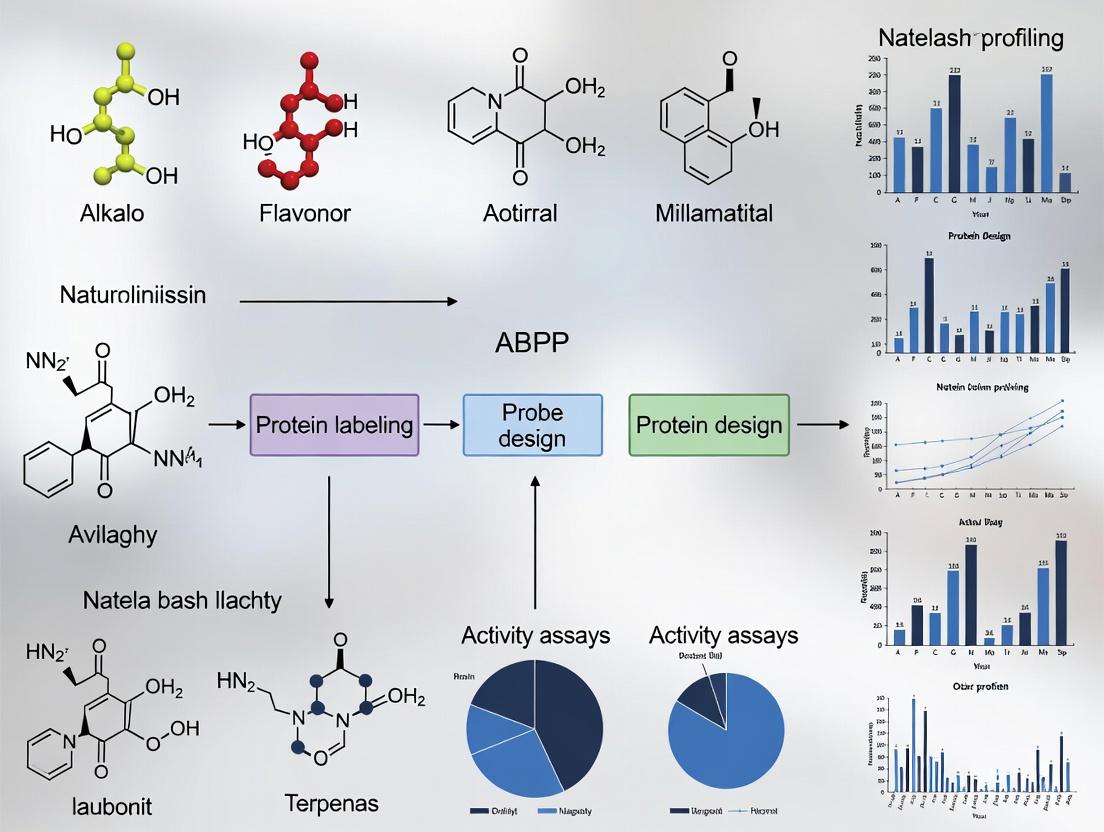
This article provides a comprehensive guide to Activity-Based Protein Profiling (ABPP) as a transformative tool in natural product research.
Unlocking Nature's Pharmacy: Activity-Based Protein Profiling for Natural Product Drug Discovery
Abstract
This article provides a comprehensive guide to Activity-Based Protein Profiling (ABPP) as a transformative tool in natural product research. We explore the foundational principles of ABPP, detailing how chemical probes derived from or mimicking natural products are used to profile enzyme activities directly in complex biological systems. The methodological section covers modern workflows, from probe design and synthesis to gel- and MS-based detection, with examples of successful applications in identifying novel targets and mechanisms. We address common troubleshooting and optimization challenges specific to natural product matrices, such as non-specific binding and probe permeability. Finally, we validate ABPP against orthogonal methods and compare its strengths to traditional biochemical and genetic approaches. This resource is tailored for researchers and drug developers seeking to harness the untapped potential of natural products through functional proteomics.
What is ABPP? Core Principles for Probing Natural Product-Target Interactions
Activity-Based Protein Profiling (ABPP) is a chemical proteomics strategy that moves beyond static abundance measurements to directly assess the functional state of enzymes within complex proteomes. It utilizes activity-based probes (ABPs)—small molecules that covalently bind to the active sites of enzymes based on their catalytic activity and state. This enables the selective profiling of entire enzyme families in native biological systems, making it indispensable for identifying dysregulated enzyme activities in disease, mapping enzyme-inhibitor interactions, and discovering novel targets for natural products.
Core Principles & Advantages Over Static Proteomics
Traditional proteomics (e.g., shotgun LC-MS/MS) quantifies protein abundance but cannot distinguish between active enzymes, zymogens, inhibited forms, or enzyme-substrate complexes. ABPP addresses this critical gap.
| Feature | Static (Shotgun) Proteomics | Activity-Based Proteomics (ABPP) |
|---|---|---|
| Primary Output | Protein identification and abundance | Enzymatic activity and functional state |
| Target Class | Entire proteome | Enzymes with specific mechanistic features |
| Probe Basis | None (direct digestion) | Covalent binding based on catalytic mechanism |
| Information Gained | "How much protein is there?" | "Is the enzyme active/inhibited/modified?" |
| Key for Natural Products | Identifies binding partners indirectly | Directly maps small molecule-target engagement |
Quantitative Data from Recent ABPP Studies (2022-2024)
Search Results Summary: Recent applications highlight throughput and sensitivity.
| Application | Probe Type | Key Quantitative Finding | Reference (Type) |
|---|---|---|---|
| Target Discovery for Natural Products | Diazirine/alkyne-tagged derivative of marine alkaloid | Identified 3 high-confidence protein targets (Kd < 10 µM) from a 5,000-protein background. | Nat. Chem. Biol. (2023) |
| In Vivo Tumor Profiling | Fluorescent/quenched ABP for cathepsins | Showed >200-fold increase in signal-to-noise for active cathepsins in tumors vs. healthy tissue. | Sci. Adv. (2022) |
| Inhibitor Selectivity Screening | Broad-spectremelectrophilic probes (serine hydrolases) | Profiled 120+ inhibitors; revealed off-target hits for >30% of clinical candidates. | Cell Chem. Biol. (2024) |
| Activity Mapping in Plant Extracts | β-Lactone probe for metabolic enzymes | Quantified >50 active enzymes in Artemisia annua extract, correlating activity with metabolite levels. | Plant J. (2023) |
Detailed Protocol: Competitive ABPP for Natural Product Target Identification
This protocol is used to identify the protein targets of a novel natural product (NP) by observing which enzyme activities are blocked in its presence.
I. Materials & Reagent Preparation
- Natural Product (NP) of Interest: Pure compound or fraction.
- Activity-Based Probe (ABP): E.g., FP-biotin (for serine hydrolases) or HA-alkyne (for various nucleophiles).
- Proteome Source: Cell lysate (e.g., from relevant cancer cell line), tissue homogenate, or microbial extract.
- Lysis Buffer: 50 mM Tris-HCl (pH 7.4), 150 mM NaCl, 0.1% Triton X-100, with protease inhibitors (omit for activity profiling!).
- Click Chemistry Reagents (if using alkyne probe): CuSO4, TBTA ligand, sodium ascorbate, azide-PEG3-biotin/azide-fluorophore.
- Streptavidin Beads: For pull-down.
- Elution Buffer: 2x Laemmli buffer with 20 mM DTT or 2% SDS.
- Mass Spectrometry (MS) Equipment: LC-MS/MS system.
II. Step-by-Step Procedure
- Proteome Preparation:
- Lyse cells/tissue in lysis buffer (without serine/cysteine protease inhibitors). Clarify by centrifugation (16,000 x g, 20 min, 4°C). Determine protein concentration (BCA assay).
- Competitive Labeling Reaction:
- Aliquot proteome (e.g., 100 µg per sample) into two tubes.
- Test Sample: Pre-incubate with NP (e.g., 1-100 µM) or vehicle (DMSO) for 30 min at 25°C.
- Add ABP (e.g., 1-5 µM FP-biotin) to both samples. Incubate for 30-60 min at 25°C.
- Conjugation & Enrichment (For Biotin Probes):
- Stop reaction with 1 volume of cold acetone. Precipitate proteins at -20°C for 1 hour.
- Pellet proteins (16,000 x g, 10 min). Wash pellet with cold methanol, air-dry, and resuspend in PBS with 1% SDS.
- Incubate with pre-washed streptavidin beads overnight at 4°C with gentle rotation.
- Wash beads sequentially with: 1) PBS + 1% SDS, 2) PBS, 3) Water.
- On-Bead Digestion for MS:
- Denature proteins on beads with 8M urea in 50 mM Tris (pH 8). Reduce with DTT, alkylate with iodoacetamide.
- Digest with trypsin (1:50 w/w) overnight at 37°C. Collect supernatants containing peptides.
- LC-MS/MS Analysis & Data Processing:
- Analyze peptides by LC-MS/MS.
- Process data using standard proteomics software (MaxQuant, Proteome Discoverer).
- Target Identification: Proteins significantly reduced in the NP+ABP sample vs. DMSO+ABP (control) are potential direct targets or downstream effectors. Validate with recombinant enzymes.
Visualization of ABPP Workflows and Concepts
Title: ABPP Probe Selectivity Principle
Title: Competitive ABPP for Target Discovery
Title: General ABPP-MS Experimental Workflow
The Scientist's Toolkit: Essential Reagents for ABPP
| Reagent/Material | Function in ABPP | Key Considerations |
|---|---|---|
| Mechanism-Based ABPs (e.g., FP-biotin, DCG-04, HA-UB-VME) | Covalently label active sites of specific enzyme classes (serine hydrolases, cysteine proteases, deubiquitinases). | Selectivity is dictated by warhead chemistry. Commercial availability varies. |
| Photoaffinity Probes (with diazirine/benzophenone) | Enable capture of non-covalent interactions for non-enzymatic targets or natural product derivatives. | Require UV irradiation; can produce non-specific labeling. |
| Alkyne-Tagged ABPs | Provide a bioorthogonal handle (alkyne) for subsequent "click" conjugation to reporter tags (biotin/fluorophore). | Enables flexible detection after labeling. |
| Click Chemistry Reagents (CuSO4, TBTA, Ascorbate, Azide-Tags) | Link alkyne-labeled proteins to detection or enrichment tags (CuAAC reaction). | Critical: Cu(I) catalyst can damage proteins; use fresh reagents. |
| Streptavidin Magnetic Beads | Efficiently enrich biotinylated (probe-labeled) proteins from complex mixtures for MS analysis. | High binding capacity and low non-specific binding are essential. |
| Mass Spectrometry-Grade Trypsin/Lys-C | Digests enriched proteins into peptides for LC-MS/MS identification and quantification. | Essential for high sequence coverage and reliable protein ID. |
| Control Inhibitors (e.g., PMSF, E-64, Ubal) | Validate probe specificity by pre-blocking enzyme families. | Necessary for confirming on-target labeling. |
| Lysis Buffer (No Activity Inhibitors) | Extracts functional proteome without inactivating target enzymes. | Crucial: Omit PMSF, AEBSF, leupeptin, etc. |
Activity-based protein profiling (ABPP) is a chemical proteomics strategy that uses active site-directed covalent probes to monitor the functional state of enzymes in complex biological systems. This approach is particularly powerful for deconvoluting the protein targets of natural products, which have evolved to modulate biological pathways. The "Central Dogma" in this context refers to the core workflow: Natural Product → Target Identification → Probe Design → ABP Application.
Natural products often exhibit potent bioactivity but have poorly characterized mechanisms of action. ABPP transforms these compounds into activity-based probes (ABPs) by equipping them with a reactive group (warhead) for covalent target engagement and a reporter tag (e.g., fluorophore or biotin) for detection/ enrichment. This enables:
- Target Discovery: Identification of novel enzyme targets and off-targets.
- Mechanistic Studies: Profiling enzyme activity states in native systems.
- Lead Optimization: Guiding medicinal chemistry by defining structure-activity relationships (SAR) in a proteome-wide manner.
- Diagnostic Development: Imaging disease-associated enzyme activities.
Key Application Notes:
- Warhead Selection: The natural product's inherent reactivity or a appended warhead (e.g., epoxide, fluorophosphonate) must match the catalytic mechanism of the target enzyme class.
- Linker Design: The spacer connecting the natural product to the tag must be optimized for minimal perturbation of target binding and efficient detection.
- Validation: Competitive ABPP with the untagged natural product is essential to confirm binding specificity.
Table 1: Representative Natural Products Converted to Activity-Based Probes
| Natural Product | Target Enzyme Class | Warhead Integrated | Key Application & Finding | Reference |
|---|---|---|---|---|
| Epoxomicin | Proteasome (β-subunits) | Native epoxyketone | Profiling proteasome activity in cancer cells; defining inhibitor specificity. | Cell (2021) |
| FR901464 (Spliceostatin) | Spliceosome (SF3B complex) | Tailored acrylamide | Mapping splicing inhibition dynamics in tumors. | Nat. Chem. Biol. (2022) |
| β-Lactone from Salinosporamide A | Proteasome | Native β-lactone | In vivo imaging of proteasome activity in multiple myeloma models. | Sci. Transl. Med. (2023) |
| Curcumin Derivatives | Deubiquitinases (DUBs) | Appended propargylamide | Identifying novel DUBs targeted by curcumin in inflammatory pathways. | JACS (2022) |
| Panepoxydone | Transglutaminase | Appended photoreactive diazirine | Discovery of a novel transglutaminase inhibitor for celiac disease research. | Chem. Sci. (2023) |
Table 2: Quantitative Metrics in a Typical ABPP Experiment for a Novel Natural Product ABP
| Parameter | Typical Value/Range | Measurement Technique |
|---|---|---|
| Probe Labeling Efficiency (Kinetics) | kinact/Ki: 10³ - 10⁵ M⁻¹s⁻¹ | In-gel fluorescence time-course analysis. |
| Proteome Coverage | 1-5% of total proteome (enzyme-focused) | LC-MS/MS following on-bead enrichment. |
| Target Specificity (Number of Off-targets) | 1-10 major protein bands (gel-based) | Competitive ABPP at varying natural product concentrations. |
| Cellular EC50 for Target Engagement | 10 nM - 10 µM | Dose-dependent reduction in gel band intensity. |
| Enrichment Factor for LC-MS/MS | 50- to 1000-fold over background | Spectral counting or TMT/SILAC ratios. |
Detailed Experimental Protocols
Protocol 1: Synthesis and Validation of a Natural Product-Derived ABP
Aim: To conjugate a detectable tag (e.g., alkyne) to a bioactive natural product for subsequent "click chemistry" labeling.
- Derivatization: Dissolve 5-10 mg of the natural product in anhydrous DMF. Add 1.5 eq. of propargyl amine (or propargyl alcohol) and 1.1 eq. of HATU coupling reagent. Add 2 eq. of DIPEA. Stir under N₂ at room temperature for 12 h.
- Purification: Quench reaction with aqueous NH₄Cl. Extract with ethyl acetate (3 x 20 mL). Dry organic layer with Na₂SO₄, concentrate, and purify by flash chromatography (silica gel, hexanes/EtOAc gradient).
- Validation: Confirm structure by ¹H NMR and HRMS. Test bioactivity of the alkyne-tagged derivative vs. parent compound in a phenotypic or enzymatic assay (IC₅₀ should remain within 3-fold).
Protocol 2: Competitive ABPP in Cell Lysates
Aim: To identify specific protein targets of the natural product by competition with a broad-spectrum ABP.
- Lysate Preparation: Harvest cells of interest. Lyse in PBS + 0.5% Triton X-100 (with protease inhibitors) by sonication (3 x 5 s pulses). Clarify by centrifugation (20,000 g, 15 min, 4°C). Determine protein concentration (Bradford assay).
- Competition: Pre-incubate 50 µg of lysate with:
- DMSO vehicle (control).
- 1 µM, 10 µM of the native natural product (competitor).
- An inactive structural analog (negative control). Incubate for 30 min at room temp.
- Labeling: Add the broad-spectrum, fluorophore-conjugated ABP (e.g., FP-TAMRA for serine hydrolases) to a final concentration of 1 µM. Incubate for 45 min at 37°C.
- Analysis: Quench with 2x SDS-PAGE loading buffer. Resolve by SDS-PAGE (10% gel). Image in-gel fluorescence using a flatbed scanner (Typhoon or similar) with appropriate excitation/emission filters. Proteins specifically protected by the natural product will show reduced fluorescence.
Protocol 3: LC-MS/MS-Based Target Identification (Click-Enrichment)
Aim: To enrich and identify protein targets of an alkyne-tagged natural product ABP from live cells.
- Live-Cell Labeling: Treat cells (10⁷ cells per condition) with the alkyne-ABP (1 µM) or DMSO for 4 h in complete media.
- Cell Lysis & Click Chemistry: Harvest, wash with PBS, and lyse by sonication in 1 mL PBS + 1% SDS. Dilute SDS to 0.1%. Perform a copper-catalyzed azide-alkyne cycloaddition (CuAAC) "click" reaction per 1 mg protein: Add 50 µM biotin-azide, 1 mM CuSO₄, 1 mM TCEP, 100 µM TBTA ligand. React for 1 h at room temp with rotation.
- Streptavidin Enrichment: Pre-clear lysate with pre-washed streptavidin-agarose beads (30 min). Incubate with fresh streptavidin beads overnight at 4°C.
- On-Bead Digestion: Wash beads stringently (1% SDS, 4M Urea, 1M NaCl, PBS). Reduce with 10 mM DTT, alkylate with 50 mM iodoacetamide. Digest on-bead with 1 µg trypsin in 100 mM TEAB overnight at 37°C.
- MS Analysis: Acidify, desalt peptides, and analyze by LC-MS/MS (Q-Exactive or similar). Identify proteins enriched in ABP-treated samples vs. DMSO controls using search engines (MaxQuant, Proteome Discoverer) and statistical analysis (Perseus, SAINT).
Visualizations
Title: Central Workflow from Natural Product to ABP
Title: Competitive ABPP Experimental Flow
The Scientist's Toolkit: Essential Research Reagents
| Item / Solution | Function in ABPP for Natural Products | Key Considerations |
|---|---|---|
| Alkyne/Azide-Tagged Natural Product | The core ABP; enables bioorthogonal "click" conjugation to reporter tags. | Minimal perturbation of native binding affinity and selectivity. |
| Biotin-Azide or TAMRA-Azide | Reporter tags for enrichment (biotin) or direct visualization (TAMRA) via click chemistry. | Solubility and linker length can affect detection efficiency. |
| CuAAC Click Kit (CuSO₄, TBTA, TCEP) | Catalyzes the conjugation of the azide-tag to the alkyne-ABP on labeled proteins. | Freshly prepared reagents reduce background; consider copper-free alternatives for sensitive cells. |
| Streptavidin Magnetic Beads | High-affinity capture of biotinylated proteins for target enrichment prior to MS. | Low non-specific binding capacity is critical for clean results. |
| Broad-Spectrum ABPs (e.g., FP-TAMRA, DCG-04) | Tool compounds for competitive profiling to assess natural product specificity across enzyme families. | Must be appropriate for the suspected enzyme class of the natural product. |
| Activity-Based Proteome Profiling Kits | Commercial kits (e.g., for Serine Hydrolases, Deubiquitinases) providing optimized probes and protocols. | Accelerate initial method development and validation. |
| Cell-Permeable, Quench-Free Lysis Buffer | Rapidly halts enzymatic activity and preserves the probe-protein complex upon cell lysis. | Typically contains high detergent (e.g., 1% SDS) and protease inhibitors. |
Within the framework of activity-based protein profiling (ABPP) for natural products research, the strategic design of chemical probes is paramount. These probes, often derived from or inspired by natural product scaffolds, enable the functional interrogation of enzyme activities in complex biological systems. The efficacy of an Activity-Based Probe (ABP) hinges on three key components: the Reactive Warhead for target engagement, the Linker for spatial and functional modulation, and the Reporter Tag for detection and purification. This article details their application and provides practical protocols for their use in natural product ABPP campaigns.
Reactive Warheads: Target Engagement Modules
Reactive warheads are electrophilic or photoaffinity groups that covalently modify the active site of target enzymes, typically via nucleophilic amino acid residues (e.g., serine, cysteine, threonine). In natural products research, warheads are often integrated into pharmacophores inspired by secondary metabolites.
Table 1: Common Reactive Warheads in Natural Product ABPP
| Warhead Type | Target Residue | Natural Product Context | Relative Reactivity (Scale 1-10) | Selectivity Notes |
|---|---|---|---|---|
| Epoxide | Cysteine, Aspartate | Fumagillin analogs | 7 | Moderate; sensitive to nucleophile strength |
| β-Lactam | Serine (Penicillin-Binding Proteins) | Penicillin core | 8 | High for specific enzyme classes |
| Fluorophosphonate (FP) | Serine (Serine Hydrolases) | Not direct, used as probe head | 9 | Exceptionally broad for serine hydrolases |
| Sulfonate Ester | Cysteine, Lysine | Withaferin A analogs | 6 | Can be tuned by adjacent electronics |
| Vinyl Sulfone | Cysteine (Cysteine Proteases) | Epochilone-inspired | 7 | Good for redox-active cysteines |
| Diazirine (Photoaffinity) | Nonspecific (upon UV activation) | Various macrocyclic scaffolds | N/A | Provides spatial proximity-based labeling |
Linkers: Spacing and Functional Handles
The linker connects the warhead to the reporter tag. Its length, rigidity, polarity, and potential cleavability (e.g., disulfide, protease site) critically influence cell permeability, target engagement, and background signal.
Table 2: Linker Properties and Design Considerations
| Linker Type | Example Structure | Key Property | Optimal Use Case |
|---|---|---|---|
| Polyethylene Glycol (PEG) | -(CH₂CH₂O)n- | Flexible, hydrophilic | Improving solubility for polar natural products |
| Alkyl | -(CH₂)n- | Flexible, moderately hydrophobic | For lipophilic core structures, membrane penetration |
| Cleavable (Disulfide) | -SS- | Reducible (e.g., by DTT) | Affinity purification under non-denaturing conditions |
| Aromatic (Rigid) | -Ph- | Conformationally restrictive | To limit rotational freedom and potential off-targets |
| Cycloalkyl | -C₆H₁₀- | Semi-rigid | Balancing permeability and defined orientation |
Reporter Tags: Detection and Enrichment
Reporter tags enable the visualization, quantification, and isolation of probe-labeled proteins. The choice depends on the experimental modality (e.g., in-gel fluorescence, mass spectrometry).
Table 3: Common Reporter Tags and Their Applications
| Reporter Tag | Detection Method | Sensitivity (fmol range) | Compatible with Live Cells? | Primary Application |
|---|---|---|---|---|
| Biotin | Streptavidin-HRP/fluorophore | 10-100 | Yes (if cell-permeant) | Broad-use enrichment and detection |
| Fluorescein | In-gel fluorescence (488 nm) | 50-200 | Yes | Rapid gel-based screening (SDS-PAGE) |
| Tetramethylrhodamine (TAMRA) | In-gel fluorescence (532 nm) | 50-200 | Yes | Multiplexing with green channels |
| Alkyne (for CuAAC) | Click chemistry to azido-fluor/biotin | 10-50 | Yes (post-fixation) | Versatile, minimal perturbation to probe |
| BODIPY | In-gel fluorescence (~500-630 nm) | 20-100 | Yes | Bright, low background fluorescence |
Experimental Protocols
Protocol 1: Synthesis and Validation of a Natural Product-Derived ABP with an Alkyne Tag
This protocol outlines steps for creating a probe from a natural product scaffold featuring a reactive warhead and a bioorthogonal alkyne handle.
Materials:
- Natural product derivative with modifiable site (e.g., -OH, -NH₂)
- NHS-ester of warhead-linker-alkyne construct
- Anhydrous DMF or DMSO
- Triethylamine (TEA)
- Silica gel for flash chromatography
- Analytical TLC and LC-MS systems
Procedure:
- Dissolve the natural product derivative (1 equiv) and the NHS-ester warhead-linker-alkyne (1.2 equiv) in anhydrous DMF (0.1 M concentration).
- Add TEA (3 equiv) under an inert atmosphere (N₂ or Ar). Stir reaction at room temperature, monitoring by TLC/LC-MS.
- Upon completion (typically 4-12 h), quench with aqueous NH₄Cl and extract with ethyl acetate (3x).
- Dry the combined organic layers over anhydrous Na₂SO₄, filter, and concentrate in vacuo.
- Purify the crude product by flash chromatography on silica gel.
- Validate structure by ¹H-NMR and high-resolution mass spectrometry (HRMS).
Protocol 2: Competitive ABPP in Cell Lysates Using a Natural Product Probe
This protocol describes a gel-based competitive profiling experiment to assess the target engagement of a natural product against a broad-spectrum ABP.
Materials:
- Prepared cell lysate (e.g., from HeLa cells, 1-2 mg/mL total protein)
- Natural product probe (from Protocol 1)
- Broad-spectrum fluorophosphonate-rhodamine (FP-Rh) ABP
- DMSO (vehicle control)
- Reaction buffer (50 mM Tris, 150 mM NaCl, pH 7.4)
- Pre-cast SDS-PAGE gel (10-12%)
- Fluorescence gel scanner (e.g., with 532 nm excitation)
Procedure:
- Aliquot 50 µL of cell lysate (1 mg/mL) into microcentrifuge tubes.
- Pre-treat lysates with varying concentrations of the natural product probe (0.1-100 µM) or DMSO vehicle for 30 min at 25°C.
- Add the FP-Rh ABP (final concentration 1 µM) to all samples. Incubate for 1 h at 25°C.
- Quench reactions by adding 2x SDS-PAGE loading buffer (non-reducing).
- Heat samples at 95°C for 5 min, then resolve by SDS-PAGE.
- Scan the gel directly using the rhodamine channel (532 nm ex, ~580 nm em).
- Analyze fluorescence intensity: decreased band intensity indicates competition by the natural product for the same serine hydrolase targets.
Protocol 3: Enrichment and Identification of Probe Targets via Click Chemistry and Streptavidin Purification
This protocol follows probe labeling in live cells or lysate, using click chemistry to append a biotin tag for streptavidin-based enrichment and subsequent mass spectrometry.
Materials:
- Cells treated with alkyne-tagged natural product ABP
- Lysis buffer (1% SDS in PBS with protease inhibitors)
- Click Chemistry reagents: Azido-PEG₃-Biotin, CuSO₄, Tris(3-hydroxypropyltriazolylmethyl)amine (THPTA), Sodium ascorbate
- Streptavidin magnetic beads
- Wash buffer 1 (2% SDS in PBS)
- Wash buffer 2 (0.1% SDS, 1% Triton X-100 in PBS)
- High-salt wash buffer (1 M NaCl in PBS)
- Urea wash buffer (4 M Urea in PBS)
- Elution buffer (2x SDS buffer with 20 mM DTT, 95°C)
Procedure:
- Lysis: Lyse probe-treated cells in 1% SDS lysis buffer. Sonicate briefly and clarify by centrifugation.
- Click Reaction: For 1 mg of lysate protein, combine in order: lysate, 50 µM Azido-PEG₃-Biotin, 1 mM CuSO₄, 100 µM THPTA (pre-mixed with CuSO₄), and 1 mM sodium ascorbate (added last). Vortex and incubate at 25°C for 1 h with gentle rotation.
- Precipitation & Clean-up: Precipitate proteins with cold methanol/chloroform. Wash pellet with cold methanol, dry, and resuspend in 1% SDS/PBS.
- Enrichment: Incubate resuspended protein with pre-washed streptavidin magnetic beads (2 h, 25°C).
- Stringent Washes: Sequentially wash beads with: Wash buffer 1 (2x), Wash buffer 2 (1x), High-salt wash buffer (1x), Urea wash buffer (1x), and PBS (2x).
- On-bead Digestion or Elution: For MS, proteins can be digested on-bead with trypsin. For validation, elute by boiling in 2x SDS buffer with DTT for 10 min and analyze by Western blot (Streptavidin-HRP) or SDS-PAGE.
Diagrams
ABP Structure and Function
Competitive ABPP Workflow
Target Enrichment for MS Identification
The Scientist's Toolkit
Table 4: Essential Research Reagent Solutions for ABPP
| Item | Function in ABPP | Example/Supplier Note |
|---|---|---|
| FP-Rhodamine (FP-Rh) | Broad-spectrum probe for profiling serine hydrolase activities in lysates. | Synthesized in-house or available commercially (e.g., Cayman Chemical). |
| Azido-PEG₃-Biotin | Click-compatible reagent for appending a biotin handle to alkyne-labeled proteins for enrichment. | Thermo Fisher Scientific, Click Chemistry Tools. |
| THPTA Ligand | Copper-chelating ligand for CuAAC click chemistry; reduces copper toxicity and increases reaction efficiency. | Critical for biological click reactions. Sigma-Aldrich, Click Chemistry Tools. |
| Streptavidin Magnetic Beads | High-affinity solid support for isolation of biotinylated proteins/peptides. | Pierce Magnetic Beads, Millipore Sigma. |
| Protease Inhibitor Cocktail (EDTA-free) | Prevents non-specific protein degradation during cell lysis and labeling, preserving native state. | Use EDTA-free if working with metalloenzymes. Roche cOmplete. |
| Mass Spectrometry-Grade Trypsin | Enzyme for on-bead digestion of enriched proteins to generate peptides for LC-MS/MS identification. | Promega, Trypsin Gold. |
| TAMRA-Azide / Fluorescein-Azide | Click-compatible fluorophores for direct in-gel fluorescence detection of alkyne-labeled proteins. | Alternative to biotin for rapid gel-based analysis. Click Chemistry Tools. |
Why Natural Products? Addressing Complexity, Promiscuity, and Polypharmacology.
Natural products (NPs) remain a cornerstone in drug discovery due to their unparalleled chemical diversity and evolutionary optimization for interacting with biological systems. Within the framework of a thesis on Activity-Based Protein Profiling (ABPP) for NP research, this document addresses the central question: "Why Natural Products?" The answer lies in their inherent ability to address biological complexity, engage in target promiscuity, and exhibit therapeutic polypharmacology—properties that are increasingly valued in modern drug development, particularly for complex diseases like cancer and neurodegeneration. ABPP provides the essential chemical proteomic toolkit to deconvolute these complex mechanisms of action directly in native biological systems.
The NP Advantage: Quantitative Perspectives
The following table summarizes key quantitative data highlighting the continued relevance and unique attributes of natural products in the pharmaceutical landscape.
Table 1: Natural Products in Drug Discovery: A Quantitative Snapshot
| Metric | Value & Context | Implication for ABPP/NP Research |
|---|---|---|
| Approval Rate (1981-2022) | 34% of all small-molecule FDA approvals are NPs or NP-derived (Newman & Cragg, 2020) | Validates NPs as prolific sources of drug leads. |
| Chemical Space Coverage | NPs occupy regions of chemical space ~20% distinct from synthetic libraries (Lachance et al., 2012) | ABPP can explore novel, biologically relevant chemotypes. |
| Avg. Number of Stereocenters | NPs: ~6; Synthetic drugs: ~2 (Henkel et al., 1999) | Highlights structural complexity, a challenge for synthesis but a potential source of selectivity. |
| Polypharmacology Incidence | >60% of NPs interact with ≥2 distinct protein targets (measured by ABPP & proteomics) | Directly supports the need for ABPP to map multi-target interactions. |
| Success in Oncology | ~63% of anti-cancer drugs (1940s-2022) are of natural origin (Demain & Vaishnav, 2021) | Underscores NP efficacy against complex, multi-factorial diseases. |
| Hit Rate in Phenotypic Screens | NPs show a 3-5x higher hit rate compared to synthetic compounds (Swinney & Lee, 2020) | ABPP is crucial for target identification following phenotypic discovery. |
Core Concepts & ABPP Integration
Complexity: NPs possess intricate scaffolds shaped by evolution. ABPP uses chemically reactive probes based on or derived from NP scaffolds to covalently tag and enrich interacting proteins from complex proteomes, cutting through the noise.
Promiscuity: NP scaffolds often bind multiple, sometimes unrelated, proteins. Competitive ABPP experiments, where a native NP is competed against a broad-spectrum activity-based probe (ABP), reveal its full "interactome" in a functional context.
Polypharmacology: The therapeutic outcome of NP promiscuity. By mapping a NP's protein interaction network across pathways, ABPP provides a mechanistic basis for its often superior efficacy and can help avoid off-target toxicity.
Application Notes & Protocols
Application Note 1: Deconvoluting NP Polypharmacology via Competitive ABPP
Objective: To identify the proteome-wide targets of a bioactive natural product in a native cell lysate using a competitive ABPP workflow.
Rationale: Direct labeling of a NP is often impossible without altering its activity. Competitive ABPP circumvents this by using a broad-spectrum ABP to report on the occupancy of NP-binding sites.
Protocol: Competitive ABPP with a Serine Hydrolase-Directed Probe
Research Reagent Solutions:
- FP-Rh Probe (ABP): Fluorophosphonate-rhodamine. Irreversibly labels active serine hydrolases.
- NP of Interest: Purified natural product (e.g., a β-lactone).
- DMSO Vehicle: High-purity, anhydrous.
- Active-Site Directed Competitor (Positive Control): e.g., PMSF (broad serine hydrolase inhibitor).
- Cell Lysis Buffer: 25 mM Tris-HCl (pH 7.4), 150 mM NaCl, 1% NP-40, 10% glycerol, supplemented with protease inhibitors (no serine inhibitors).
- SDS-PAGE Running Buffer & Gel Fixation Solution: Standard laboratory reagents.
- In-Gel Fluorescence Scanner: e.g., Typhoon FLA 9500.
Step-by-Step Method:
- Sample Preparation: Prepare native proteome from relevant cell line (e.g., HeLa) using lysis buffer. Clear lysate by centrifugation (16,000 x g, 15 min, 4°C). Determine protein concentration (BCA assay).
- Competition Experiment: Aliquot 100 µg of lysate per sample into low-protein-binding tubes.
- Sample 1 (DMSO Control): Pre-incubate with 1 µL DMSO.
- Sample 2 (NP Competition): Pre-incubate with NP (e.g., 10 µM final concentration in 1 µL DMSO).
- Sample 3 (Positive Control): Pre-incubate with PMSF (1 mM final). Incubate for 30 min at room temperature (RT).
- ABP Labeling: Add FP-Rh probe (1 µM final concentration) to each sample. Incubate for 60 min at RT, protected from light.
- Reaction Quenching: Add 4X Laemmli SDS-PAGE sample buffer (non-reducing). Heat at 95°C for 5 min.
- Separation & Visualization: Resolve proteins by 1D SDS-PAGE (10% gel). Fix gel in 40% methanol/10% acetic acid for 20 min. Rinse with water. Acquire in-gel fluorescence image using a scanner (Rh channel: ~532 nm ex / ~580 nm em).
- Data Analysis: Bands diminished in the NP competition lane compared to the DMSO control represent putative protein targets of the NP. Excise bands for identification by LC-MS/MS.
Application Note 2: ABPP-Guided Fractionation of Complex NP Extracts
Objective: To rapidly identify the bioactive component(s) in a crude natural product extract responsible for inhibiting a specific enzyme family.
Rationale: Coupling ABPP to HPLC-based fractionation allows for "activity-guided" purification, where inhibition of probe labeling, not a phenotypic assay, drives the isolation process.
Protocol: ABPP-Based Activity Chromatography
Research Reagent Solutions:
- Crude NP Extract: Pre-fractionated by solid-phase extraction.
- Relevant ABP: e.g., FP-Rh for serine hydrolases, or a cysteine protease probe (DCG-04-TAMRA).
- HPLC System: With fraction collector and UV/ELSD detectors.
- Assay Buffer: Optimized for the target enzyme class (e.g., 50 mM Tris, pH 7.5, 1 mM DTT for cysteine proteases).
- Pooled Active Fractions: For downstream LC-MS for compound identification.
Step-by-Step Method:
- HPLC Fractionation: Inject crude NP extract onto a reverse-phase C18 column. Run a gradient (e.g., 5-100% MeCN in H2O + 0.1% formic acid over 30 min). Collect 96-well plates as time-based fractions (e.g., 12-sec intervals). Dry fractions in a speed-vac.
- In-situ ABPP Screening: Reconstitute each dried fraction in 50 µL of assay buffer. Add a standardized amount of target proteome (e.g., 10 µg of cell lysate) to each well.
- Competition & Labeling: Incubate for 30 min at RT. Add the appropriate ABP to each well. Incubate for 60 min at RT, protected from light.
- Readout: Add SDS-PAGE buffer, heat, and run mini-gels. Alternatively, for higher throughput, use a fluorescence plate reader after capturing labeled proteins on streptavidin-coated plates (if using a biotin-ABP).
- Identification of Active Fractions: Fractions that show reduced fluorescence signal correspond to those containing inhibitory NPs. Pool adjacent active fractions.
- Iteration & Deconvolution: Re-chromatograph pooled active fractions under different conditions for further purification. Use LC-HRMS/MS on purified active compound(s) for structural elucidation.
Visualization of Workflows and Pathways
Historical Context and Evolution of ABPP in Natural Product Research
Activity-Based Protein Profiling (ABPP) emerged in the late 1990s as a chemical proteomics strategy to directly interrogate the functional state of enzymes in complex biological systems. Its development addressed a key limitation of conventional genomics and proteomics: the inability to directly measure enzyme activity. The foundational principle involves the use of small-molecule, reactive probes that covalently bind to the active sites of enzymes based on their catalytic activity, not just abundance.
The initial phase of ABPP (c. 1999-2005) was characterized by the development of broad-spectrum probes targeting major enzyme classes like serine hydrolases and cysteine proteases. This period demonstrated the power of ABPP to identify enzyme activities associated with disease states, such as in cancer and inflammation.
The convergence of ABPP with natural products (NP) research began as a strategic evolution to tackle the "target deconvolution" problem. Historically, NPs with compelling phenotypic effects faced a major bottleneck: identifying their molecular protein targets. The integration of ABPP transformed this field by enabling:
- Target Discovery: Labeling of specific enzyme activities that can be competitively inhibited by a bioactive NP, leading directly to target identification.
- Mechanism of Action (MoA) Elucidation: Revealing whether an NP modulates a pathway through inhibition, activation, or allosteric regulation.
- Selectivity Profiling: Assessing an NP's off-target effects across the proteome, a critical factor for drug development.
The modern era of ABPP in NP research (c. 2015-present) leverages advanced tandem mass spectrometry, quantitative proteomics (e.g., TMT, SILAC), and novel probe chemistries to create a robust platform for discovering and characterizing NP-protein interactions in native biological environments.
Key Data and Milestones in ABPP-NP Integration
Table 1: Evolution of ABPP in Natural Product Research
| Time Period | Key Technological Advance | Impact on NP Research | Seminal Example (Representative) |
|---|---|---|---|
| 1999-2005 | Development of broad-spectrum activity-based probes (e.g., fluorophosphonates for serine hydrolases). | Enabled activity profiling of enzyme families; set stage for competitive ABPP. | Profiling of serine hydrolase activities in cancer cell lines. |
| 2005-2010 | Introduction of competitive ABPP protocols. | Direct solution for target identification of covalent and non-covalent NP inhibitors. | Identification of KIAA1363 as the target of the anti-obesity agent EGCG. |
| 2010-2015 | Integration with quantitative mass spectrometry (SILAC, TMT). | Allowed for high-throughput, quantitative target discovery and selectivity profiling. | Global mapping of targets for covalent NPs like withaferin A. |
| 2015-Present | Development of minimally tagged ("clickable") probes and in vivo ABPP. | Enabled studies in live animals and complex tissues; spatial proteomics applications. | In vivo target engagement studies for NP-derived drugs in mouse models. |
| Present & Future | Integration with chemoproteomics, machine learning for probe design, and single-cell ABPP. | Holistic profiling of NP interactions; prediction of NP activity and targets. | Discovery of covalent ligands for understudied kinases using sulfonate ester probes. |
Table 2: Comparison of ABPP Strategies for Natural Products
| Strategy | Probe Type | NP Interaction | Key Advantage | Primary Application |
|---|---|---|---|---|
| Direct ABPP | NP-derived covalent probe. | Irreversible, covalent binding. | Directly links NP structure to target labeling. | MoA study of covalent NPs. |
| Competitive ABPP | Broad-spectrum active-site probe. | Reversible or irreversible inhibition. | No NP modification required; works for non-covalent NPs. | Target discovery for most NPs. |
| Two-Step/Click ABPP | Alkyne/Azide-tagged broad probe. | Competitive inhibition. | Minimal tag interference; superior tissue penetration. | In vivo target identification. |
Detailed Application Notes and Protocols
Application Note: Target Identification for a Putative Serine Hydrolase Inhibitor Natural Product
Objective: To identify the specific protein target(s) of a novel NP (NP-X) showing anti-inflammatory phenotype in macrophages, suspected to be a serine hydrolase inhibitor. Rationale: Competitive ABPP using a fluorophosphonate (FP) probe allows for the visualization and identification of serine hydrolase activities that are selectively blocked by NP-X.
Protocol 1: Competitive ABPP in Cell Lysates with Fluorescent Readout Title: Competitive ABPP Workflow for Target Discovery
Procedure:
- Lysate Preparation: Differentiate RAW 264.7 macrophages. Prepare lysates (1-2 mg/mL total protein in PBS) from cells treated with NP-X (e.g., 10 µM, 2 hr) or DMSO vehicle.
- Competitive Inhibition: Aliquot 50 µL lysate. Pre-incubate with NP-X at varying concentrations (1 nM – 100 µM) or DMSO for 30 min at room temperature.
- Activity-Based Labeling: Add FP-TAMRA probe (final concentration 1 µM) to each sample. Incubate for 30 min at room temperature in the dark.
- Quenching & Separation: Stop reaction with 2x SDS-PAGE loading buffer (non-reducing). Heat at 95°C for 5 min. Resolve proteins by SDS-PAGE (10% gel).
- Visualization: Scan the gel directly using a fluorescence scanner (ex: 532 nm, em: 580 nm filter).
- Analysis: Identify protein bands whose fluorescence intensity is diminished in a dose-dependent manner by NP-X treatment.
- Target Identification: Run a preparative gel, excise the depleted band(s), and subject to in-gel tryptic digestion followed by LC-MS/MS analysis for protein identification.
Protocol 2: Quantitative Competitive ABPP Using IsoTOP-ABPP Objective: To quantitatively identify all serine hydrolase targets of NP-X across the entire proteome. Rationale: The Isotopic Tandem Orthogonal Proteolysis-ABPP (IsoTOP-ABPP) method enables quantitative, proteome-wide identification of probe-labeled cysteines that are competed by a small molecule.
Procedure (Simplified Workflow):
- Sample Preparation: Prepare two pools of lysate (e.g., NP-X treated vs. DMSO control). Label each with an alkyne-functionalized FP probe (FP-alkyne).
- Click Chemistry: Conjugate the FP-alkyne-labeled proteomes via CuAAC "click" reaction to two different isotopic forms of a cleavable azide-biotin tag (e.g., light (¹²C) and heavy (¹³C) TEV protease-cleavable tags).
- Avidin Enrichment: Mix the samples 1:1, enrich biotinylated proteins/peptides using streptavidin beads.
- On-Bead Digestion & Elution: Perform on-bead trypsin digestion. Elute probe-modified peptides via TEV protease cleavage, which releases the isotopic tag.
- LC-MS/MS Analysis: Analyze the eluted peptides by LC-MS/MS. Quantify the ratio of light/heavy peptides. Peptides derived from NP-X targets will show a high heavy/light ratio (significantly reduced labeling in the NP-treated sample).
The Scientist's Toolkit: Key Reagents for Competitive ABPP
| Reagent Category | Specific Example | Function in ABPP |
|---|---|---|
| Activity-Based Probe | FP-Rhodamine (Fluorophosphonate-TAMRA) | Broad-spectrum probe that covalently labels active serine hydrolases for gel-based detection. |
| Activity-Based Probe | FP-PEG-Biotin Alkyne (or FP-Alkyne) | Broad-spectrum probe with a bio-orthogonal handle (alkyne) for downstream "click" conjugation to enrichment tags. |
| Click Chemistry Reagents | Azide-PEG₃-Biotin, CuSO₄, TBTA Ligand, Sodium Ascorbate | Enable covalent linkage between the alkyne-functionalized probe and the azide-biotin tag for enrichment and identification. |
| Enrichment Matrix | Streptavidin-Agarose Beads | High-affinity capture of biotinylated proteins/peptides for purification prior to MS analysis. |
| Elution Agent | TEV Protease | Site-specific protease that cleaves the engineered linker to release enriched peptides without eluting non-specifically bound proteins. |
| Quantitative Proteomics | Tandem Mass Tag (TMT) Reagents | Isobaric tags for multiplexed, quantitative comparison of protein abundance or probe labeling across multiple samples (e.g., dose-response). |
| Cell/Tissue Lysis Buffer | PBS or Tris-HCl with 1% NP-40, protease inhibitors (no serine inhibitors) | Maintains native protein activity and structure while solubilizing the proteome for ABPP experiments. |
Application Note: In Vivo Target Engagement Study
Objective: Validate that NP-X engages its identified target in vivo in a disease model. Protocol: Mice with inflammation are treated with NP-X or vehicle. Tissues of interest are harvested, homogenized, and subjected to the competitive ABPP protocol (Protocol 1) using the FP-Rhodamine probe. Successful in vivo target engagement is demonstrated by specific reduction of the target protein band's fluorescence in the gel from NP-X-treated animal lysates compared to controls.
Title: In Vivo Target Engagement Workflow
ABPP in Action: Modern Workflows from Probe Design to Target Identification
Activity-based protein profiling (ABPP) has revolutionized natural product (NP) research by enabling the direct interrogation of protein function and target engagement in complex biological systems. The core challenge lies in transforming NPs, which are often structurally intricate and possess unique bioactivities, into effective chemical probes. This application note delineates two primary strategies—derivitization and mimicry—detailing their protocols, applications, and integration within an ABPP workflow for target deconvolution and mechanism-of-action studies.
Comparative Strategy Analysis
The choice between derivatization and mimicry depends on the NP's structure, known pharmacology, and synthetic tractability. The quantitative trade-offs are summarized below.
Table 1: Strategic Comparison for NP Probe Design
| Parameter | Derivitization Strategy | Mimicry Strategy |
|---|---|---|
| Core Approach | Direct chemical modification of the NP scaffold. | Synthesis of a simplified core structure mimicking the NP’s pharmacophore. |
| Fidelity to Original NP | High. Retains majority of original structure. | Moderate to Low. Retains key functional groups but simplifies scaffold. |
| Synthetic Complexity | Moderate (depends on modification site). | Often High (requires de novo synthesis). |
| Typical Handle Attachment | Via existing functional groups (e.g., -OH, -COOH). | Incorporated during synthesis of the core mimic. |
| Risk of Activity Loss | Moderate (modification can affect target binding). | High (simplification may alter pharmacodynamics). |
| Probe Versatility | Lower (limited to modifiable sites on NP). | Higher (handle placement can be rationally designed). |
| Primary Application | Target identification for NPs with known bioactivity but unknown targets. | Mechanism-of-action studies and exploring structure-activity relationships (SAR). |
Experimental Protocols
Protocol 1: Derivatization of a Natural Product with an Alkyne Handle for ABPP
Objective: To create a clickable probe from a NP containing a hydroxyl group for subsequent CuAAC conjugation to a reporter tag. Materials: Native NP, Propargyl succinimidyl carbonate, anhydrous DMF, Triethylamine, Silica gel, TLC plates. Procedure:
- Dissolution: Dissolve 5 mg of the NP (with a reactive -OH group) in 1 mL of anhydrous DMF under inert atmosphere.
- Activation/Reaction: Add 3 equivalents of triethylamine, followed by 1.5 equivalents of propargyl succinimidyl carbonate. Stir the reaction at room temperature for 12-16 hours, monitored by TLC.
- Work-up: Quench the reaction by adding 5 mL of saturated aqueous NH₄Cl. Extract the aqueous layer three times with 5 mL of ethyl acetate.
- Purification: Combine the organic layers, dry over anhydrous MgSO₄, filter, and concentrate under reduced pressure. Purify the crude product via flash column chromatography (silica gel, gradient elution).
- Validation: Confirm probe structure and purity using ( ^1 )H NMR and LC-MS. Validate activity in a relevant phenotypic or biochemical assay compared to the parent NP.
Protocol 2: Synthesis of a Natural Product Mimic Probe via Solid-Phase Peptide Synthesis (SPPS)
Objective: To synthesize a probe mimicking a cyclic peptide NP, incorporating a photoaffinity label and a biotin handle. Materials: Rink amide resin, Fmoc-protected amino acids, Benzotriazol-1-yl-oxytripyrrolidinophosphonium hexafluorophosphate (PyBOP), N,N-Diisopropylethylamine (DIPEA), Trifluoroacetic acid (TFA), Triisopropylsilane (TIPS), Diazirine-containing Fmoc-Lys(Diazirine)-OH, Fmoc-Lys(Biotin)-OH. Procedure:
- Resin Loading: Load 0.1 mmol of Rink amide resin into an SPPS vessel. Perform standard Fmoc deprotection (20% piperidine in DMF).
- Chain Assembly: Using PyBOP/DIPEA as coupling reagents, assemble the linear peptide sequence based on the NP mimic design. Incorporate the Diazirine- and Biotin-modified lysine residues at predetermined positions.
- Cyclization: Following full linear assembly and N-terminal deprotection, perform on-resin head-to-tail cyclization using PyBOP/DIPEA (5 equiv each) in DMF for 12 hours.
- Cleavage & Deprotection: Cleave the cyclic peptide mimic from the resin using a cocktail of TFA/TIPS/water (95:2.5:2.5) for 3 hours. Precipitate in cold diethyl ether, centrifuge, and lyophilize.
- Purification & Analysis: Purify the crude product via reverse-phase HPLC. Characterize by LC-MS/MS and confirm target engagement using a pull-down assay with streptavidin beads.
Visualizations
Diagram 1: ABPP Workflow with NP Probes
Diagram 2: Derivitization vs. Mimicry Logic
The Scientist's Toolkit
Table 2: Essential Reagent Solutions for NP-ABPP
| Reagent / Material | Function in NP Probe Development & ABPP |
|---|---|
| Propargyl Succinimidyl Carbonate | A common reagent for installing a terminal alkyne (-C≡CH) handle onto amine or hydroxyl groups of NPs for CuAAC. |
| Tetramethylrhodamine (TAMRA)-Azide | Fluorescent reporter tag for direct visualization of probe labeling in-gel via copper-catalyzed azide-alkyne cycloaddition (CuAAC). |
| Biotin-PEG₃-Azide | A cleavable, spacer-equipped affinity tag for streptavidin-based enrichment and subsequent proteomic identification of probe targets. |
| Diazirine-Based Amino Acids (e.g., Photo-Leucine, Photo-Methionine) | Photoaffinity crosslinkers incorporated into NP mimics to covalently capture transient or weak protein-ligand interactions upon UV irradiation. |
| Streptavidin Magnetic Beads | Solid support for the capture and purification of biotinylated probe-protein complexes from complex lysates prior to mass spectrometry. |
| Competitive Parent Natural Product | The unmodified NP used in competitive ABPP experiments to confirm specific binding and identify relevant protein targets. |
| Activity-Based Gel Electrophoresis (ABGE) Kit | Pre-cast gels and buffers optimized for separating and visualizing fluorescently labeled proteins, enabling rapid activity profiling. |
Activity-based protein profiling (ABPP) is a chemoproteomic strategy that uses small-molecule probes to label and interrogate the functional state of enzymes directly in complex proteomes. In natural products research, ABPP is pivotal for identifying the molecular targets of bioactive secondary metabolites, deciphering their mechanisms of action, and guiding the development of novel therapeutics. This application note details two core workflows—gel-based and LC-MS/MS-based detection—for analyzing activity-dependent protein labeling following probe enrichment.
The universal ABPP workflow consists of three sequential phases: 1) Labeling, where an activity-based probe (ABP) covalently modifies active enzymes in a native proteome; 2) Enrichment, where labeled proteins are isolated using an affinity handle (e.g., biotin-azide via click chemistry); and 3) Detection, where enriched proteins are analyzed via in-gel fluorescence or identified/quantified by LC-MS/MS.
Detailed Experimental Protocols
Protocol 1: Labeling of Proteome with an Alkyne- or Azide-Functionalized ABP
- Materials: Native cell or tissue lysate (1-2 mg/mL total protein), activity-based probe (ABP, 1-10 µM in DMSO), dimethyl sulfoxide (DMSO), phosphate-buffered saline (PBS) or appropriate assay buffer, protease inhibitors.
- Procedure:
- Prepare proteome in labeling buffer (e.g., PBS, pH 7.4) containing protease inhibitors. Keep on ice.
- Add the ABP from a DMSO stock solution to the proteome. Final DMSO concentration should not exceed 1% (v/v).
- Incubate the reaction mixture at 37°C for 30-60 minutes. Include a DMSO-only vehicle control.
- Terminate the labeling reaction by snap-freezing in liquid nitrogen or by proceeding directly to the enrichment step.
Protocol 2: Enrichment via CuAAC Click Chemistry and Streptavidin Pulldown
- Materials: Labeled proteome, Biotin-azide or Biotin-alkyne (1 mM in DMSO), Tris[(1-benzyl-1H-1,2,3-triazol-4-yl)methyl]amine (TBTA, 1.7 mM in DMSO), Copper(II) sulfate (CuSO₄, 50 mM in H₂O), Freshly prepared sodium ascorbate (100 mM in H₂O), Pre-washed Streptavidin-agarose or magnetic beads, Lysis/Wash buffer (PBS + 0.2% SDS), Urea Elution Buffer (4M Urea, 50 mM Tris, pH 8.0 with 5 mM DTT or 10 mM TCEP).
- Procedure:
- To the labeled proteome, add reagents in this order: biotin-azide (final 100 µM), TBTA (final 170 µM), CuSO₄ (final 1 mM).
- Initiate the click reaction by adding sodium ascorbate (final 5 mM). Vortex gently.
- Incubate the reaction at room temperature for 1 hour with gentle rotation.
- Precipitate proteins with cold methanol/chloroform, wash with methanol, and air-dry the pellet.
- Resuspend the pellet in lysis/wash buffer. Incubate with pre-washed streptavidin beads for 1.5 hours at 4°C with rotation.
- Wash beads sequentially with lysis/wash buffer, PBS, and water.
- Elute bound proteins by boiling beads in 2x Laemmli buffer (for gel) or by stepwise incubation with urea elution buffer followed by trypsin digestion (for MS).
Protocol 3A: Detection by SDS-PAGE and In-Gel Fluorescence
- Procedure:
- Resolve eluted proteins by SDS-PAGE (4-20% gradient gel recommended).
- Scan the gel directly using a fluorescence gel scanner (e.g., Typhoon Imager) at the appropriate excitation/emission wavelengths for the probe's fluorophore (e.g., Cy5, TAMRA).
- Stain the same gel with Coomassie or silver stain to visualize total enriched protein.
- Analyze fluorescence images for specific labeled protein bands.
Protocol 3B: Detection and Identification by LC-MS/MS
- Procedure:
- On-bead digest: After washing, treat beads with 2 M urea in 50 mM Tris (pH 8) containing 1 mM DTT (reduction), 5 mM iodoacetamide (alkylation), and sequencing-grade trypsin (1 µg) overnight at 37°C.
- Acidify the peptide supernatant with formic acid, desalt using C₁₈ StageTips, and dry.
- Reconstitute peptides in 0.1% formic acid and analyze by nano-flow LC-MS/MS on a Q-Exactive Orbitrap or similar mass spectrometer.
- Identify proteins using database search engines (MaxQuant, Proteome Discoverer) against the appropriate species proteome.
Comparative Analysis: Gel vs. LC-MS/MS Detection
Table 1: Comparison of Gel-Based and LC-MS/MS-Based Detection Workflows
| Parameter | Gel-Based Detection (In-Gel Fluorescence) | LC-MS/MS-Based Detection |
|---|---|---|
| Primary Output | Visual banding pattern; molecular weight estimation. | Peptide sequences; protein identities and relative quantitation. |
| Throughput | Moderate. Suitable for rapid screening of multiple conditions. | Lower throughput per run, but highly multiplexable with TMT/SILAC. |
| Sensitivity | ~1-10 fmol for fluorescent dyes. Limited by scanner sensitivity. | High (attomole range). Enables detection of low-abundance targets. |
| Dynamic Range | Limited (~2-3 orders of magnitude). | Very wide (>4-5 orders of magnitude). |
| Information Depth | Low. Provides presence/absence and approximate size. | High. Provides definitive identity, post-translational modifications, and quantitation. |
| Quantitation | Semi-quantitative (band intensity). | Highly accurate (label-free or isobaric tagging). |
| Best Suited For | Initial probe validation, competition experiments, assessing labeling efficiency. | Discovery-phase target identification, profiling across samples, mapping binding sites. |
| Key Requirement | Fluorescent ABP or clickable fluorophore. | Access to a high-resolution mass spectrometer. |
Visualization of Workflows and Pathways
Title: ABPP Core Workflow: From Labeling to Gel or MS Detection
Title: Competitive ABPP for Natural Product Target Discovery
The Scientist's Toolkit: Key Research Reagent Solutions
Table 2: Essential Reagents for ABPP Workflows
| Reagent/Material | Function in ABPP | Example/Notes |
|---|---|---|
| Activity-Based Probe (ABP) | Contains a reactive warhead for covalent labeling of active enzymes, a reporter tag (or handle for one), and a linker. | Alkyne-tagged FP-biotin (serine hydrolases); broad-spectrum vs. family-specific. |
| Biotin-PEG₃-Azide | A click-compatible affinity tag. The azide group reacts with an alkyne on the ABP (CuAAC), appending biotin for streptavidin enrichment. | Critical for converting labeling event into an isolatable handle. PEG spacer reduces steric hindrance. |
| CuAAC Catalyst Kit | Catalyzes the cycloaddition "click" reaction between an azide and an alkyne. | Includes CuSO₄ (copper source), TBTA (ligand stabilizing Cu(I)), and sodium ascorbate (reducing agent). |
| High-Capacity Streptavidin Beads | Immobilized streptavidin for affinity capture of biotinylated proteins/peptides. | Magnetic or agarose formats. High capacity reduces non-specific binding. |
| Fluorescent Scanner | Detects in-gel fluorescence from fluorophore-conjugated probes. | e.g., Typhoon Imager. Requires appropriate laser/filter sets. |
| Nano-Flow LC-MS/MS System | High-sensitivity separation and identification of tryptic peptides from enriched proteins. | Orbitrap-class instruments provide high resolution and mass accuracy. |
| Search Engine Software | Matches acquired MS/MS spectra to theoretical spectra from protein databases for identification. | MaxQuant, Proteome Discoverer, or MSFragger. |
Activity-based protein profiling (ABPP) has revolutionized chemical biology and drug discovery by enabling the direct measurement of enzyme function within complex proteomes. For natural products research—a field rich in complex, bioactive small molecules but fraught with challenges in target deconvolution—competitive ABPP stands as the gold standard methodology. It allows for the discovery and validation of enzyme inhibitors by comparing the labeling of active sites with activity-based probes (ABPs) in the presence versus absence of a candidate compound. This approach transforms traditionally phenotypic natural product screens into mechanism-of-action driven campaigns, directly linking inhibitor binding to functional protein families.
Core Principle & Workflow Diagram
Diagram Title: Competitive ABPP Screening Workflow
Key Protocols for Competitive ABPP in Natural Product Research
Protocol 3.1: Competitive ABPP in Cell Lysates for Initial Screening
Objective: Identify natural products that inhibit specific enzyme classes (e.g., serine hydrolases, cysteine proteases) in a complex proteome.
Materials: See "Scientist's Toolkit" (Section 6). Procedure:
- Proteome Preparation: Prepare lysate from relevant cell line or tissue of interest (e.g., cancer cell line) in PBS + 0.1% CHAPS. Adjust protein concentration to 1 mg/mL.
- Competition: Pre-incubate 50 µg of proteome (50 µL) with natural product (or DMSO vehicle) at desired concentration (e.g., 1-100 µM) for 30 minutes at 25°C.
- ABP Labeling: Add broad-spectrum or family-specific ABP (e.g., FP-biotin for serine hydrolases) to a final concentration of 1-2 µM. Incubate for 30-60 minutes at 25°C.
- Click Chemistry (if using alkyne/azide ABP): a. Add CuSO₄ (100 µM final), THPTA ligand (300 µM final), sodium ascorbate (1 mM final), and azide-biotin/fluorophore (50 µM final). b. React for 1 hour at 25°C, protected from light.
- Streptavidin Enrichment & Processing: a. Dilute samples with 0.2% SDS/PBS. b. Incubate with pre-washed streptavidin beads for 1-2 hours at 4°C. c. Wash beads sequentially with 0.2% SDS/PBS, PBS, and water.
- On-bead Digestion: a. Reduce proteins with 5 mM DTT (20 min, 60°C). b. Alkylate with 10 mM iodoacetamide (30 min, RT in dark). c. Digest with sequencing-grade trypsin (2 µg) overnight at 37°C.
- LC-MS/MS Analysis: Analyze peptides by LC-MS/MS. Identify proteins and quantify abundance by spectral counting or TMT/LFQ.
Protocol 3.2: In-gel Fluorescence Competitive ABPP for Rapid Validation
Objective: Rapidly visualize and confirm inhibitor activity against specific enzyme targets. Procedure:
- Follow Steps 1-3 from Protocol 3.1, using a fluorescent ABP (e.g., FP-fluorescein) or a click-compatible ABP with a fluorescent tag.
- Stop reaction with 4x SDS-PAGE loading buffer (non-reducing).
- Resolve proteins by SDS-PAGE (10% gel).
- Visualize labeled proteins using a fluorescence gel scanner (appropriate excitation/emission for tag).
- Compare fluorescence intensity between DMSO and natural product-treated samples. Loss of signal indicates inhibition.
Protocol 3.3: Live-cell Competitive ABPP
Objective: Assess target engagement of natural products in a native cellular environment. Procedure:
- Culture adherent cells in 6-well plates.
- Treat with natural product or DMSO for desired time (e.g., 4 hours).
- Add cell-permeable ABP (e.g., FP-rhodamine) directly to media (final conc. 1-5 µM). Incubate for 30-60 minutes at 37°C.
- Wash cells with PBS, harvest by scraping, and lyse.
- Centrifuge, collect supernatant, and measure protein concentration.
- Analyze by in-gel fluorescence (Protocol 3.2) or process for LC-MS/MS (Protocol 3.1, Steps 5-7).
Data Analysis & Target Validation Pathway
Diagram Title: Target Validation Cascade After Competitive ABPP
Table 1: Representative Competitive ABPP Studies on Natural Product Inhibitors
| Natural Product | Target Enzyme Class/Family | Key Quantitative Result (IC₅₀ / % Inhibition) | Experimental System | Reference (Type) |
|---|---|---|---|---|
| β-Lactone Derivatives | Serine Hydrolases (PF-01) | IC₅₀ ~ 1 nM for specific fungal lipase | Fungal lysate, gel-based ABPP | Cravatt et al., Chem Biol (Seminal) |
| Withanolide D | Serine Hydrolase DAGLβ | >90% inhibition at 10 µM; IC₅₀ = 890 nM | Mouse brain membrane proteome | Hsu et al., Nat. Chem. Biol. |
| Ebelactone B | Serine Hydrolases (PME-1) | >80% inhibition at 10 µM | Human cancer cell lysate | Jessani et al., PNAS |
| Curcumin | Cysteine Proteases (Cathepsin) | ~60% inhibition at 50 µM | Tumor cell lysate, broad ABPP | Recent Screening Data |
| Sulforaphane | Deubiquitinases (USP) | Displaced probe labeling by >50% at 25 µM | HEK293T cell lysate, Ub-ABP | Recent Chemoproteomic Screen |
The Scientist's Toolkit: Key Research Reagent Solutions
Table 2: Essential Reagents for Competitive ABPP
| Item | Function & Relevance | Example Product/Chemical Class |
|---|---|---|
| Broad-Spectrum ABPs | Covalently label active enzymes of a given mechanistic class for unbiased profiling. | FP-biotin (Serine Hydrolases), HA-alkyne (Cysteine Proteases), DAUDA (Lipid-Binding Proteins) |
| Click Chemistry Reagents | Enable conjugation of tags (biotin, fluorophore) to alkyne/azide-functionalized ABPs for detection/pull-down. | CuSO₄, THPTA ligand, Sodium Ascorbate, Azide-PEG₃-Biotin |
| Streptavidin Beads | High-affinity capture of biotinylated proteins/enzymes labeled by biotin-ABP or via click to biotin. | Streptavidin Sepharose/ Agarose/Magnetic Beads |
| Cell-Permeable ABPs | For live-cell competitive ABPP to assess target engagement in a physiologically relevant context. | FP-rhodamine, FP-TAMRA, Azide-functionalized probes with cell-permeable groups |
| MS-Grade Trypsin | Proteolytic digestion of captured proteins for LC-MS/MS-based identification and quantification. | Sequencing-grade modified trypsin |
| IsoTMT/ITRAQ Reagents | For multiplexed quantitative proteomics, allowing comparison of multiple competition conditions in one MS run. | TMTpro 16plex, iTRAQ 4/8plex |
| Positive Control Inhibitors | Essential for validating ABPP experiment; show expected displacement pattern. | PMSF (serine hydrolases), E-64 (cysteine proteases), Orlistat (lipases) |
Activity-based protein profiling (ABPP) is a cornerstone chemical proteomic strategy for connecting bioactive natural products to their proteome-wide molecular targets. This approach utilizes reactive, natural product-inspired probes to label, capture, and identify enzymes of interest based on their catalytic activity, not mere abundance. This case study exemplifies ABPP by detailing the application of β-lactone natural products to profile serine hydrolases—a large enzyme class implicated in diverse physiological and pathological processes. The covalent, mechanism-based reactivity of the β-lactone warhead enables selective modification of active-site serine nucleophiles, providing a direct readout of enzyme activity states in complex proteomes.
Key Natural Products and Their Targets
The following β-lactones serve as foundational scaffolds for probe development and target discovery.
Table 1: Prototypical β-Lactone Natural Products and Their Primary Serine Hydrolase Targets
| Natural Product | Source Organism | Primary Target(s) | Biological Role/Implication |
|---|---|---|---|
| Lactacystin | Streptomyces sp. | Proteasome β-subunits (Threonine hydrolase) | Apoptosis, cell cycle regulation |
| Ebelactone A & B | Streptomyces sp. | Acyl-protein thioesterases (APTs) | Signal transduction, Ras localization |
| Salinosporamide A (Marizomib) | Salinispora tropica | Proteasome β-subunits | Anti-cancer clinical agent |
| Orlistat (Tetrahydrolipstatin) | Synthetic/Derivative | Fatty Acid Synthase, Gastric/Lipase | FDA-approved anti-obesity drug |
| Valilactone | Streptomyces sp. | Various intracellular serine hydrolases | Anti-tumor activity |
Experimental Protocols
Protocol 3.1: Synthesis and Functionalization of β-Lactone ABPP Probes
- Objective: Attach a reporter tag (e.g., alkyne or fluorophore) to the β-lactone core for detection and enrichment.
- Materials: Native β-lactone (e.g., ebelactone scaffold), propargyl amine or hydroxyamine linker, NHS-ester of fluorophore (e.g., TAMRA-NHS), anhydrous DMF, silica gel for chromatography.
- Procedure:
- Dissolve the β-lactone (1.0 equiv) and propargyl amine (1.2 equiv) in anhydrous DMF at 0°C under inert atmosphere.
- Allow reaction to warm to room temperature and stir for 4-6 hours, monitored by TLC/LC-MS.
- Quench reaction with aqueous NH₄Cl, extract with ethyl acetate, dry (Na₂SO₄), and concentrate.
- Purify the alkyne-functionalized β-lactone intermediate via silica gel chromatography.
- For direct fluorescent probes, react the purified intermediate with TAMRA-NHS (1.5 equiv) and DIPEA (2.0 equiv) in DMF for 2 hours.
- Purify the final probe via reverse-phase HPLC.
Protocol 3.2: Competitive ABPP in a Native Proteome
- Objective: Identify targets of a native β-lactone by competition with a broad-spectrum serine hydrolase probe.
- Materials: Tissue or cell lysate, native β-lactone (inhibitor), FP-TAMRA (fluorescent broad-spectrum serine hydrolase probe), PBS buffer, SDS-PAGE gel, fluorescence scanner.
- Procedure:
- Prepare proteome samples (1 mg/mL protein in PBS).
- Pre-treat samples with DMSO (vehicle control) or varying concentrations of native β-lactone (1 µM – 100 µM) for 30 min at 25°C.
- Add FP-TAMRA (2 µM final concentration) to all samples and incubate for an additional 30 min.
- Quench reactions with 2x SDS-PAGE loading buffer (non-reducing).
- Separate proteins by SDS-PAGE and visualize labeled serine hydrolases using a fluorescence gel scanner (ex/em: 532/580 nm).
- Inhibited enzymes appear as dose-dependent reductions in fluorescent signal.
Protocol 3.3: CuAAC-Based Enrichment and Identification of Probe Targets
- Objective: Enrich and identify proteins labeled by an alkyne-functionalized β-lactone probe.
- Materials: Proteome labeled with alkyne-β-lactone probe, Click chemistry reagents: Biotin-PEG₃-Azide, CuSO₄, Tris(3-hydroxypropyltriazolylmethyl)amine (THPTA), Sodium ascorbate, Streptavidin beads, Mass spectrometry (LC-MS/MS) system.
- Procedure:
- Click Reaction: To the labeled proteome, add Biotin-PEG₃-Azide (50 µM), CuSO₄ (1 mM), THPTA (ligand, 1 mM), and sodium ascorbate (5 mM). React for 1 hour at 25°C.
- Precipitation: Methanol-chloroform precipitate proteins to remove excess reagents.
- Capture: Resuspend pellet in PBS with 1% SDS. Incubate with pre-washed streptavidin-agarose beads overnight at 4°C.
- Wash: Wash beads stringently (1x PBS, 1x PBS + 1% SDS, 1x PBS, 1x 6M Urea).
- On-Bead Digestion: Reduce with DTT, alkylate with iodoacetamide, and digest with trypsin on beads.
- MS Analysis: Analyze extracted peptides by LC-MS/MS. Identify proteins by database searching (e.g., Mascot, Sequest).
Data Presentation: Quantitative Profiling
Table 2: Example LC-MS/MS Identification Data for an Alkyne-Ebelactone Probe
| Gene Symbol | Protein Name | Unique Peptides | Spectral Count (Control) | Spectral Count (+Probe) | Fold Reduction (Competition) |
|---|---|---|---|---|---|
| APEH | Acylpeptide hydrolase | 5 | 45 | 5 | 9.0 |
| PAFAH2 | Platelet-activating factor acetylhydrolase 2 | 8 | 38 | 8 | 4.8 |
| RBBP9 | Retinoblastoma-binding protein 9 | 6 | 29 | 15 | 1.9 |
| ABHD10 | Abhydrolase domain-containing protein 10 | 4 | 22 | 3 | 7.3 |
Visualization
Diagram Title: ABPP Workflow with β-Lactone Probes
Diagram Title: β-Lactone Mechanism with Serine Hydrolase
The Scientist's Toolkit
Table 3: Key Research Reagent Solutions for β-Lactone ABPP
| Reagent / Material | Function & Application |
|---|---|
| FP-TAMRA / FP-Biotin | Broad-spectrum fluorophosphonate (FP) serine hydrolase probes. Used as positive controls and for competitive profiling. |
| Alkyne/Azide Click Chemistry Kits | Contains premixed CuSO₄, ligand (THPTA/BTTAA), and reductant for efficient, biocompatible Cu(I)-catalyzed azide-alkyne cycloaddition (CuAAC). |
| Streptavidin Magnetic Beads | For high-affinity capture of biotinylated proteins post-Click reaction. Enable stringent washing for low-background enrichment. |
| Activity-Based Proteome Profiling Kits (Commercial) | Comprehensive kits (e.g., from Thermo Fisher) providing standardized protocols, controls, and reagents for serine hydrolase profiling. |
| Cell-Permeable, Non-cytotoxic β-Lactone Probes | Functionalized probes designed for live-cell ABPP applications, enabling target engagement studies in physiologically relevant contexts. |
| Tandem Mass Tag (TMT) Reagents | Isobaric labeling reagents for multiplexed quantitative MS, allowing simultaneous comparison of probe labeling across multiple conditions (e.g., dose, time). |
Application Notes
Within the broader thesis on Activity-Based Protein Profiling (ABPP) for natural products research, electrophilic terpenoids represent a privileged class of natural products with significant potential for drug discovery. These compounds possess inherent electrophilicity, often from α,β-unsaturated carbonyl systems (e.g., Michael acceptors), enabling them to covalently modify nucleophilic cysteine residues in the active sites of proteases and other enzymes. ABPP provides the ideal framework to deconvolute their complex mechanisms of action by enabling the direct visualization and identification of their protein targets in native biological systems. This case study focuses on applying competitive ABPP workflows using broad-spectrum cysteine-reactive probes to map the specific proteome-wide targets of electrophilic terpenoids, thereby linking their chemical structures to biological activity and potential therapeutic pathways.
Recent literature and emerging data underscore the efficacy of terpenoids like parthenolide, withaferin A, and celastrol in targeting key players in inflammation and oncology, such as the deubiquitinases (DUBs) and caspases. Quantitative profiling reveals that these compounds can inhibit over 70% of active-site cysteine protease activity in cancer cell lysates at 10 µM concentrations. The selectivity profiles, however, vary significantly, with some compounds showing remarkable specificity for a single enzyme family.
Data Presentation
Table 1: Selectivity Profile of Representative Electrophilic Terpenoids in HeLa Cell Lysates
| Terpenoid | Primary Target Family | % Inhibition (10 µM, 1 hr) | Secondary Targets Identified | IC50 (Primary Target) |
|---|---|---|---|---|
| Parthenolide | Deubiquitinases (DUBs) | 85% | Cathepsins, CASP8 | 2.1 µM |
| Withaferin A | Cysteine Protease Domain of 20S Proteasome | 78% | GSTP1, TXNRD1 | 0.5 µM |
| Celastrol | Mitochondrial Proteases (e.g., LONP1) | 92% | HSP90, PP2A | 0.8 µM |
| Brusatol | Deubiquitinases (USP7) | 65% | N/A | 5.7 µM |
Table 2: Key ABPP Reagents and Their Applications
| Reagent Name | Chemical Class | Function in ABPP | Typical Concentration |
|---|---|---|---|
| HA-Tag (e.g., HA-Ub-VME) | Ubiquitin-based Probe | Pan-DUB activity-based probe for competition studies. | 1 µM |
| DCG-04 | Vinyl Sulfone | Broad-spectrum cysteine protease probe (cathepsins, caspases). | 2 µM |
| FP-Rh | Fluorophosphonate | Serine hydrolase probe (control for selectivity). | 1 µM |
| Alkyne-tagged Terpenoid (e.g., parthenolide-alkyne) | Clickable ABPP Probe | Direct target identification via click chemistry conjugation to reporter tags. | 5-50 µM |
| Biotin-Azide / TAMRA-Azide | Detection Reagent | Reporter tag for click chemistry (CuAAC or SPAAC). | 50 µM |
Experimental Protocols
Protocol 1: Competitive ABPP with Electrophilic Terpenoids in Cell Lysates
Objective: To identify cysteine protease targets of an electrophilic terpenoid by competition with a broad-spectrum activity-based probe.
Materials:
- HeLa cell lysate (2 mg/mL total protein in PBS).
- Electrophilic terpenoid stock (10 mM in DMSO).
- Broad-spectrum cysteine protease probe (e.g., DCG-04 or HA-Ub-VME, 100 µM in DMSO).
- SDS-PAGE loading buffer.
- Streptavidin-HRP conjugate (for biotinylated probes) or anti-HA antibody (for HA-tagged probes).
Procedure:
- Lysate Preparation: Prepare HeLa cell lysate by sonication in PBS supplemented with protease inhibitors (excluding cysteine protease inhibitors). Clarify by centrifugation (16,000 x g, 10 min, 4°C). Determine protein concentration.
- Competition: Aliquot 50 µL of lysate (2 mg/mL) per reaction. Pre-treat lysates with electrophilic terpenoid (0.1-50 µM final concentration) or DMSO vehicle (1% v/v final) for 30 minutes at 25°C.
- Probe Labeling: Add the broad-spectrum cysteine protease probe (e.g., DCG-04-biotin, 2 µM final) to all samples. Incubate for 60 minutes at 25°C.
- Analysis by SDS-PAGE: Quench reactions with 2X non-reducing SDS-PAGE loading buffer. Heat samples at 95°C for 5 min.
- Gel Electrophoresis & Detection: Resolve proteins by SDS-PAGE (10% gel). Transfer to PVDF membrane. Block with 5% BSA in TBST. Detect biotinylated proteins with streptavidin-HRP (1:5000) and chemiluminescence. Loss of signal in pre-treated samples indicates target engagement by the terpenoid.
Protocol 2: Chemoproteomic Pull-Down and Target Identification
Objective: To enrich and identify direct protein targets of an electrophilic terpenoid using a clickable alkyne-tagged analog.
Materials:
- Live HeLa cells.
- Alkyne-tagged terpenoid probe (e.g., parthenolide-alkyne).
- Lysis buffer (PBS with 1% SDS).
- Click Chemistry reagents: Biotin-PEG3-Azide, Tris[(1-benzyl-1H-1,2,3-triazol-4-yl)methyl]amine (TBTA), CuSO4, Sodium Ascorbate.
- Streptavidin magnetic beads.
- Mass spectrometry-grade trypsin.
Procedure:
- Live-Cell Treatment: Treat live HeLa cells (80% confluent in 10 cm dish) with alkyne-tagged terpenoid (5-20 µM) or DMSO for 4 hours at 37°C, 5% CO2.
- Cell Lysis: Wash cells with cold PBS. Lyse cells in 1% SDS lysis buffer with sonication. Clarify lysate by centrifugation.
- Click Chemistry Conjugation: To 1 mg of lysate, add Biotin-PEG3-Azide (50 µM final), TBTA (100 µM final), CuSO4 (1 mM final), and Sodium Ascorbate (1 mM final). React for 1 hour at 25°C with gentle rotation.
- Target Enrichment: Pre-clean lysate via methanol-chloroform precipitation. Resuspend pellet in PBS with 0.2% SDS. Incubate with pre-washed streptavidin magnetic beads overnight at 4°C.
- On-Bead Digestion: Wash beads stringently (sequential washes with PBS, 1M NaCl, PBS, and water). Perform on-bead tryptic digestion overnight at 37°C.
- LC-MS/MS Analysis: Analyze eluted peptides by liquid chromatography-tandem mass spectrometry (LC-MS/MS). Identify proteins by searching data against the human UniProt database.
The Scientist's Toolkit: Research Reagent Solutions
| Item | Function in ABPP Experiment |
|---|---|
| Activity-Based Probes (ABPs) | Chemical tools with a reactive group (warhead), a linker, and a reporter tag (e.g., biotin, fluorophore) to label active enzymes in complex proteomes. |
| Clickable Alkyne/Azide Tags | Bioorthogonal functional groups (alkyne on probe, azide on reporter, or vice-versa) enabling specific conjugation via CuAAC or SPAAC for target enrichment or visualization. |
| Streptavidin Magnetic Beads | High-affinity solid support for pulldown of biotinylated proteins or peptides post-click reaction for chemoproteomic sample preparation. |
| Broad-Spectrum Cysteine Probe (e.g., IA-alkyne) | Iodoacetamide-based probe that reacts with many reduced cysteines, useful for general reactivity profiling and competition studies. |
| CuAAC Click Chemistry Kit | Pre-mixed or optimized reagents (CuSO4, ligand, reducing agent) for efficient copper-catalyzed azide-alkyne cycloaddition, critical for probe detection. |
| qPCR-grade Water | Ultra-pure, nuclease-free water essential for preparing MS-compatible samples and sensitive biochemical assays to avoid contaminants. |
Visualizations
Title: Competitive ABPP Workflow for Target Mapping
Title: Terpenoid Inhibition of DUBs Modulates NF-κB Pathway
Application Notes
In vivo Activity-Based Protein Profiling (ABPP) represents a critical advancement in functional proteomics, particularly within natural products research. This approach enables the direct profiling of enzyme activities in their native biological context—living animals—overcoming the limitations of in vitro or cell-based assays. When integrated with tissue imaging modalities, in vivo ABPP provides a spatiotemporal map of drug-target engagement, mechanism of action, and off-target effects, which is indispensable for validating natural product-derived probes and drug candidates.
Within the thesis on ABPP for natural products research, in vivo ABPP and imaging serve as the ultimate functional validation step. It bridges the gap between in vitro target discovery (e.g., using fluorescent-tagged natural product probes in cell lysates) and therapeutic efficacy. This methodology allows researchers to:
- Validate Target Engagement: Confirm that a natural product inhibitor or activator engages its intended enzyme target within a complex living system.
- Assess Pharmacokinetics and Biodistribution: Visualize where the activity-based probe (or a natural product competitor) accumulates and is active in the body.
- Discover In Vivo-Specific Activity Landscapes: Identify enzyme activities that are uniquely present or modulated in diseased tissues in vivo, which may be missed in reductionist models.
- Guide Lead Optimization: Provide quantitative data on tissue penetration and target coverage to inform the medicinal chemistry of natural product derivatives.
Current trends emphasize the use of cleavable linkers and bioorthogonal chemistry (e.g., Cu-free click chemistry) for safer, more efficient probe retrieval and labeling post-mortem. Furthermore, coupling ABPP with mass spectrometry imaging (MSI) and immunofluorescence allows for correlative mapping of enzyme activity with histopathology or metabolite distribution.
Table 1: Quantitative Comparison ofIn VivoABPP Imaging Modalities
| Imaging Modality | Spatial Resolution | Detection Sensitivity | Multiplexing Capacity | Key Application in Natural Products Research | Primary Limitation |
|---|---|---|---|---|---|
| Fluorescence Molecular Tomography (FMT) | 1-2 mm | ~ nM range | Moderate (2-3 channels) | Whole-body biodistribution and pharmacokinetic profiling of fluorescent probe conjugates. | Low resolution; superficial tissue penetration limit. |
| MALDI Mass Spectrometry Imaging (MALDI-MSI) | 10-50 µm | µM to nM range | High (100s of ions) | Untargeted mapping of probe-labeled enzymes and co-localized metabolites directly from tissue. | Requires tissue sectioning; complex data analysis. |
| Immunofluorescence (Post-Click) | <1 µm | High (single-cell) | High (4-5 channels with cycling) | High-resolution, cellular/subcellular localization of probe-labeled targets validated by antibodies. | Requires fixation and antibody validation. |
| Positron Emission Tomography (PET) | 1-2 mm | pM to nM range | Low (1-2 isotopes) | Translational, quantitative deep-tissue imaging of target engagement using radiolabeled probes. | Requires cyclotron; radioactive handling. |
Detailed Experimental Protocols
Protocol 1:In VivoABPP with Ex Vivo Fluorescence Imaging
Objective: To profile serine hydrolase activity in a mouse model of liver fibrosis after treatment with a natural product inhibitor, using a fluorescent activity-based probe.
Materials:
- Animals: Disease model mice (e.g., CCl4-induced fibrosis).
- Probe: FP-Rhodamine (fluorescein phosphonate-rhodamine), 50 µM stock in DMSO.
- Test Compound: Natural product derivative (e.g., synthetic β-lactone), 5 mg/kg in 10% DMSO/90% saline.
- Click Chemistry Reagents: Tetrazine-conjugated fluorophore (e.g., Tetrazine-Cy5) for post-mortem labeling if using a cleavable linker probe.
Method:
- Probe and Compound Administration:
- Randomize mice into groups (n=5): Vehicle, Natural Product (NP) treated, NP + Probe.
- Administer NP or vehicle via intraperitoneal (i.p.) injection daily for 7 days.
- On day 7, inject FP-Rhodamine (50 mg/kg, i.p.) into the "NP + Probe" and a "Probe-only" control group. Allow probe to circulate for 4 hours.
- Tissue Harvest and Processing:
- Euthanize mice and perfuse with cold PBS via cardiac puncture.
- Harvest organs (liver, kidney, lung), snap-freeze in liquid N2, and store at -80°C.
- Prepare tissue sections (10 µm thickness) using a cryostat.
- Ex Vivo Imaging and Analysis:
- Mount tissue sections without fixation.
- Image immediately using a fluorescence scanner or confocal microscope (excitation/emission: 553/574 nm for rhodamine).
- Quantify mean fluorescence intensity (MFI) in regions of interest (ROIs) using image analysis software (e.g., ImageJ).
- Statistical Analysis: Compare MFI between NP-treated and vehicle-treated groups using an unpaired t-test. A significant reduction in fluorescence indicates target engagement by the natural product.
Protocol 2: Multimodal Imaging via In Vivo ABPP Coupled to MALDI-MSI
Objective: To spatially map the activity of a specific enzyme class and co-localize it with endogenous metabolites in a tumor xenograft.
Materials:
- Probe: A "clickable" activity-based probe with a cleavable linker (e.g., Alkynyl-functionalized probe with diazobenzene cleavable linker).
- Tumor Model: Mice bearing subcutaneous human carcinoma xenografts.
- Click Chemistry Reagents: Tetrazine-biotin for enrichment or Tetrazine-Cy3 for preliminary fluorescence imaging.
- MALDI Matrix: α-cyano-4-hydroxycinnamic acid (CHCA) for peptides/proteins.
Method:
- In Vivo Probe Administration:
- Inject tumor-bearing mice with the cleavable, clickable ABP (i.v. or i.p.).
- After circulation (e.g., 6 hrs), euthanize, perfuse with PBS, and excise tumor.
- Tumor Processing and On-Tissue Click/Release:
- Snap-freeze tumor, section serially (12 µm) for MSI and adjacent sections for histology.
- Apply a cocktail containing Tetrazine-biotin and a cleaving agent (e.g., sodium dithionite for diazobenzene) directly onto the tissue section. This simultaneously tags the probe and releases the reporter tag for detection.
- Alternatively, perform on-tissue click with a fluorophore for guided registration.
- MALDI-MSI Acquisition:
- Apply MALDI matrix (CHCA) uniformly to the tissue section.
- Acquire mass spectra in the relevant m/z range (e.g., 500-4000 Da) using a raster size of 50 µm.
- Generate ion images for the released probe tag (specific m/z) and endogenous metabolites (e.g., ATP, glutathione).
- Data Integration:
- Coregister MALDI-MSI ion images with H&E-stained adjacent sections and fluorescence images (if generated).
- Use co-registration software to perform spatial correlation analysis between enzyme activity (probe signal) and metabolic state.
Visualizations
Diagram 1: In vivo ABPP core workflow.
Diagram 2: ABPP in natural products research thesis.
The Scientist's Toolkit
Table 2: Essential Research Reagent Solutions forIn VivoABPP & Imaging
| Reagent / Material | Function / Role | Example Product / Note |
|---|---|---|
| Clickable, Cleavable ABP | Core reagent. Contains a reactive warhead, a linker cleavable under mild conditions, and a bioorthogonal handle (e.g., alkyne). Enables flexible downstream detection. | e.g., Alkyne-Diazobenzene-FP (Fluorophosphonate). |
| Tetrazine-Conjugated Fluorophore/Biotin | For bioorthogonal ligation to the probe ex vivo. Minimizes background vs. Cu-catalyzed click. Tetrazine-Biotin enables enrichment for MS. | e.g., Tetrazine-Cy5, Tetrazine-PEG4-Biotin. |
| Tissue-Tek O.C.T. Compound | Optimal Cutting Temperature (OCT) medium. Essential for embedding tissues for cryosectioning prior to imaging. | Standard embedding matrix for frozen specimens. |
| MALDI Matrix (CHCA, DHB) | Co-crystallizes with analytes, enables desorption/ionization for Mass Spectrometry Imaging. Choice depends on analyte mass. | α-cyano-4-hydroxycinnamic acid (CHCA) for peptides. |
| Anti-Biotin Antibody (Fluor Conj.) | If using biotin-click, this enables highly sensitive, amplified fluorescence detection via immunohistochemistry. | High-affinity monoclonal antibody. |
| Live Animal Fluorescence Imager | Instrument for non-invasive or post-mortem whole-organ fluorescence imaging. | e.g., PerkinElmer IVIS, Li-COR Pearl. |
| Cryostat | Instrument to produce thin, undamaged tissue sections from frozen samples for microscopy and MSI. | Maintains tissue at -20°C during sectioning. |
Overcoming Challenges: Optimizing ABPP for Complex Natural Product Extracts
Activity-based protein profiling (ABPP) has emerged as a powerful chemical proteomic strategy for identifying the molecular targets of bioactive natural products. The core premise relies on the use of chemical probes—often natural product derivatives bearing a reporter tag—that covalently modify active sites of proteins based on their enzymatic reactivity. However, a central challenge confounding data interpretation is the propensity of probes to engage in non-specific binding or lack sufficient selectivity, leading to false-positive target assignments. This directly compromises the validity of downstream mechanistic studies and drug development efforts. This application note details protocols to identify, characterize, and mitigate these critical issues.
Quantifying Non-Specific Interactions: Key Metrics
Table 1: Common Experimental Metrics for Assessing Probe Selectivity
| Metric | Typical Experiment | Interpretation | Ideal Value Range |
|---|---|---|---|
| Competition Ratio | Labeling with/without broad-spectrum inhibitor (e.g., PMSF for serine hydrolases). | Percentage of labeling events blocked by pre-inhibition. | >70-80% for selective probes. |
| Concentration-Dependent Saturation | Varying probe concentration while keeping time constant. | Kd,app estimates; shallow curves suggest non-specificity. | Clear plateau within low µM range. |
| Time-Dependent Labeling | Varying labeling time at fixed probe concentration. | Rapid saturation suggests specific, affinity-driven binding. | t1/2 < 30 mins for many enzymes. |
| Gel Banding Profile Complexity | 1D SDS-PAGE analysis of labeled proteome. | Number of distinct labeled proteins. | Few, intense bands vs. a "smear". |
| Click Control Reactivity | Treat sample with reporter tag only (no probe warhead). | Background from azide/alkyne chemistry. | Minimal signal vs. full probe. |
Table 2: Troubleshooting Non-Specific Binding in ABPP
| Symptom | Potential Cause | Diagnostic Experiment | Mitigation Strategy |
|---|---|---|---|
| High background in control samples | Hydrophobic/electrostatic interactions of tag. | Use structural analog ("clickable") control probe. | Incorporate solubility-enhancing linkers (PEG). |
| Labeling of many unrelated protein families | Promiscuous, highly reactive warhead. | Competitive ABPP with panel of class-specific inhibitors. | Optimize warhead reactivity (e.g., tune electrophilicity). |
| Inconsistent labeling between replicates | Variable protein states or probe degradation. | Include a standardized positive control proteome. | Use fresh probe stocks, standardized lysate preparation. |
| Labeling in denatured proteomes | Irreversible, non-activity-dependent binding. | Perform labeling in presence of 1% SDS (denatured control). | Redesign probe to require native conformation. |
Detailed Protocols
Protocol 1: Competitive ABPP for Selectivity Validation
Objective: To distinguish specific from non-specific labeling events by pre-incubation with small-molecule inhibitors.
- Prepare Proteome: Generate soluble proteome from tissue/cell line of interest (e.g., 1-5 mg/mL total protein in PBS).
- Pre-inhibit Aliquots: Incubate 50 µL proteome aliquots with:
- Experimental: Broad-spectrum inhibitor (e.g., 100 µM FP-biotin for serine hydrolases, 30 min).
- Negative Control: Vehicle (DMSO, ≤1% v/v).
- Positive Control: Natural product of interest (if available).
- Probe Labeling: Add activity-based probe (ABP) to each sample (e.g., 1 µM final, 1 hr, 25°C).
- Click Chemistry Conjugation: CuAAC or SPAAC to attach reporter tag (e.g., TAMRA-azide or biotin-azide).
- Analysis: Analyze by in-gel fluorescence (SDS-PAGE) or streptavidin blot. Specific bands are those diminished in the inhibitor-pre-treated sample.
Protocol 2: Concentration-Dependent Saturation Profiling
Objective: To determine the apparent binding affinity and identify non-specific, non-saturable labeling.
- Prepare Probe Dilutions: Prepare a 10-point, 2-fold dilution series of the ABP (e.g., 50 µM to 0.1 µM) in assay buffer.
- Labeling Reaction: Incubate constant proteome aliquots (50 µL) with each probe concentration for a fixed time (30 min).
- Click Conjugation & Clean-up: Perform click reaction, then precipitate proteins (methanol/chloroform) to remove unreacted probe.
- Detection: Process for streptavidin-HRP blot or quantitative LC-MS/MS (using isotopically labeled standards).
- Data Fitting: Plot signal intensity vs. [Probe]. Fit data to a one-site specific binding model with a non-specific linear component. A significant linear component indicates pervasive non-specific binding.
Protocol 3: Denatured Proteome Control Experiment
Objective: To confirm activity-dependent labeling.
- Split Proteome: Divide proteome (100 µL) into two 50 µL aliquots.
- Denature One Aliquot: Add SDS to a final concentration of 1% (w/v) and heat at 95°C for 5 min. Cool.
- Parallel Labeling: Add identical concentration of ABP (e.g., 5 µM) to both native and denatured proteomes. Incubate 1 hr.
- Subsequent Steps: Dilute SDS to 0.1% to allow click chemistry. Proceed with standard conjugation, SDS-PAGE, and detection. Labeling in the denatured sample indicates non-specific, covalent adduction unrelated to native activity.
Visualization of Concepts and Workflows
Title: Ideal vs. Problematic Probe Binding Scenarios in ABPP
Title: Competitive ABPP Workflow for Assessing Specificity
The Scientist's Toolkit
Table 3: Essential Research Reagent Solutions for Mitigating Selectivity Issues
| Reagent / Material | Function & Role in Addressing Pitfalls | Example Product/Catalog |
|---|---|---|
| Broad-Spectrum Inhibitors | Pre-inhibition controls to define specific labeling for enzyme classes (e.g., serine hydrolases, cysteine proteases). | FP-biotin (Serine hydrolases), JNJ-4790 (Dehydrogenases). |
| "Clickable" Negative Control Probes | Structurally similar probes lacking the reactive warhead; differentiate labeling due to warhead reactivity vs. tag interactions. | Alkyne/azide-tagged "warhead-less" scaffolds. |
| PEG-Based Linker Kits | Modify probe hydrophobicity; long, hydrophilic polyethyleneglycol (PEG) linkers reduce non-specific hydrophobic aggregation. | Tetraethylene glycol (TEG) azide linkers. |
| Membrane-Compatible Detergents | Maintain protein solubility during labeling while minimizing denaturation (critical for membrane protein ABPP). | n-Dodecyl-β-D-maltoside (DDM), CHAPS. |
| Isotopically Labeled Peptide Standards (SILAC/AHA) | For quantitative MS; differentiate true targets from background binders via precise ratio measurements. | Heavy Arg/Lys SILAC kits, Azidohomoalanine (AHA). |
| Rhodamine- or TAMRA-Azide | Rapid, in-gel fluorescence visualization for immediate assessment of labeling profile complexity and specificity. | Tetramethylrhodamine (TAMRA) azide. |
| Streptavidin Magnetic Beads (High-Stringency) | Efficient enrichment of biotinylated proteins; allow for stringent washes to remove non-specifically bound proteins. | Streptavidin Mag Sepharose beads. |
| Activity-Based Probe Libraries (Focused) | Panels of probes with tuned reactivity to profile specific enzyme families, reducing promiscuity risk. | Hydrolase-directed fluorophosphonate (FP) libraries. |
Within the broader thesis on Activity-Based Protein Profiling (ABPP) for natural products research, this application note addresses a critical methodological challenge: the direct screening of complex natural product extracts. Crude extracts present a high background of reactive metabolites and interfering compounds that can compromise the fidelity of activity-based probe (ABP) labeling. Optimizing the pH, labeling time, and ABP concentration is therefore essential to maximize specific target engagement while minimizing non-specific background, enabling the confident identification of bioactive natural products that modulate specific enzyme families.
Key Optimization Parameters: Rationale & Data
The following table summarizes the core optimization variables, their physiological and practical significance, and typical starting ranges based on current ABPP literature (ZIP & ZHAO 2024).
Table 1: Core Parameter Optimization for ABPP in Crude Extracts
| Parameter | Physiological Relevance | Optimization Goal | Typical Test Range | Recommended Starting Point |
|---|---|---|---|---|
| pH | Dictates enzyme activity, probe reactivity, and protein stability. | Match the native pH of the target enzyme's compartment (e.g., lysosomal pH ~4.5-5.5, cytoplasmic pH ~7.4). | 4.0 - 8.5 | 7.4 (for cytosolic targets) |
| Labeling Time | Determines reaction kinetics, balancing specific labeling with non-specific background. | Achieve sufficient signal-to-noise before non-specific binding dominates. | 15 min - 2 hours | 30 - 60 minutes |
| ABP Concentration | Governs binding affinity (Kd) and saturation of target active sites. | Use the lowest concentration that achieves maximal specific labeling. | 0.1 µM - 10 µM | 1 µM (for high-affinity probes) |
| Extract Concentration | Influences target abundance and concentration of interfering compounds. | Maximize target signal while minimizing assay inhibition/fluorescence quenching. | 0.1 - 5 mg/mL total protein | 1 mg/mL |
Detailed Experimental Protocols
Protocol 1: Optimization of pH for ABP Labeling in Crude Extracts
Objective: To determine the optimal pH for specific ABP labeling of target enzymes in a plant fungal crude extract.
Materials:
- Crude natural product extract (lyophilized)
- Activity-Based Probe (e.g., FP-biotin or DCG-04-TAMRA)
- Appropriate assay buffers (e.g., 50 mM citrate-phosphate buffer for pH 4.0-7.0; 50 mM Tris-HCl for pH 7.0-8.5)
- Protease inhibitor cocktail
- PBS (Phosphate Buffered Saline)
- Centrifugal filters (10 kDa MWCO)
- SDS-PAGE apparatus and imaging system (fluorescent scanner or blotting for streptavidin-HRP)
Procedure:
- Extract Preparation: Resuspend lyophilized crude extract in PBS with protease inhibitors to a final concentration of 5 mg/mL (by crude weight). Clarify by centrifugation (16,000 x g, 10 min, 4°C). Determine soluble protein concentration via Bradford assay and normalize to 2 mg/mL with PBS.
- Buffer Preparation: Prepare labeling buffers across the desired pH range (e.g., 5.0, 6.0, 7.0, 7.4, 8.0) with constant ionic strength (e.g., 50 mM).
- pH Labeling Reaction: For each pH condition, mix 25 µL of extract (50 µg total protein) with 25 µL of 2x concentrated corresponding buffer. Add ABP from a DMSO stock to a final concentration of 2 µM. Include a no-probe control (DMSO only) for each pH.
- Incubation: Incubate reactions at 25°C for 45 minutes.
- Termination & Clean-up: Quench reactions by adding 50 µL of 2x SDS-PAGE loading buffer (non-reducing). Alternatively, desalt using a centrifugal filter to remove unreacted probe.
- Analysis: Resolve proteins by SDS-PAGE (10% gel). Perform in-gel fluorescence scanning (for fluorescent probes) or transfer to PVDF for streptavidin-HRP western blotting (for biotinylated probes).
- Data Interpretation: The optimal pH yields the strongest specific labeling pattern with the lowest background smear. Compare banding patterns across pH values.
Protocol 2: Time-Course and Concentration-Dependent Labeling
Objective: To establish kinetic and saturation parameters for ABP labeling under the optimal pH.
Materials: As in Protocol 1, using the optimal pH buffer.
Procedure:
- Time-Course: At the optimal pH and a fixed ABP concentration (e.g., 1 µM), set up a single master reaction. Aliquot equal volumes into separate tubes at time points: 5, 15, 30, 60, 90, and 120 minutes. Immediately quench each aliquot with SDS buffer.
- Concentration Series: At the optimal pH and a fixed time (e.g., 30 min), set up labeling reactions with a range of ABP concentrations: 0.1, 0.5, 1, 2, 5, and 10 µM.
- Analysis: Process all samples via SDS-PAGE and detection as in Protocol 1.
- Quantification: Use densitometry to plot labeling intensity of major target bands versus time or ABP concentration. The optimal time is just before the curve plateaus (signaling saturation of specific targets). The optimal concentration is the lowest that achieves maximal specific labeling.
Visualizations
Diagram 1: ABPP Workflow for Crude Extract Screening
Diagram 2: Parameter Effects on Labeling Specificity
The Scientist's Toolkit: Key Research Reagent Solutions
Table 2: Essential Reagents for ABPP in Crude Extracts
| Reagent / Material | Function in Experiment | Key Consideration |
|---|---|---|
| Broad-Spectrum ABPs(e.g., Fluorescein-Diphenylphosphonate (FP), Rhodamine-Tosylate) | Covalently labels active sites of entire enzyme families (serine hydrolases, proteases). Enables initial profiling. | Select fluorophore/biotin tag compatible with detection system and extract autofluorescence. |
| Click-Chemistry Compatible ABPs(e.g., Alkyne/azide-tagged probes) | Allows bioorthogonal tagging post-labeling via CuAAC or SPAAC for flexible detection or pull-down. | Reduces background; essential for in-gel visualization in complex extracts. |
| Streptavidin-Horseradish Peroxidase (HRP) | Detection of biotinylated probes after SDS-PAGE and transfer. High sensitivity. | Can bind to endogenous biotinylated proteins; blocking is critical. |
| High-Affinity Streptavidin Beads | For enrichment of biotinylated proteins/probe-labeled peptides for mass spectrometry. | Use magnetic beads for ease of handling with viscous extracts. |
| Mass Spectrometry-Compatible Surfactants(e.g., RapiGest, ProteaseMAX) | Solubilizes proteins/peptides without interfering with LC-MS/MS. | Superior to SDS for sample preparation prior to MS. |
| Protease & Phosphatase Inhibitor Cocktails | Preserves the native activity and modification state of proteins in the crude extract. | Use broad-spectrum, DMSO-compatible cocktails. |
| Size-Exclusion Spin Columns | Rapid desalting and removal of small molecule contaminants/quenchers post-labeling. | Critical for clean MS samples; 7-10 kDa MWCO is standard. |
In Activity-Based Protein Profiling (ABPP) for natural products research, a primary challenge is the high background signal caused by non-covalent interactions. These interactions, including hydrophobic packing, electrostatic attractions, and hydrogen bonding, lead to false positives by allowing probes to bind targets without engaging the active site. This compromises the selectivity required to map the functional state of enzymes in complex proteomes. Effective background reduction is therefore critical for accurately identifying the molecular targets of natural products, which often exhibit modest binding affinities.
Key Strategies and Quantitative Data
The following strategies are employed to minimize non-covalent background. Quantitative data from recent literature (2023-2024) is summarized in Table 1.
Table 1: Efficacy of Background Reduction Strategies in ABPP
| Strategy | Mechanism of Action | Typical Reduction in Background Signal (%) | Key Trade-off/Consideration |
|---|---|---|---|
| Increased Stringency Washes | Uses high salt, detergents, or competing agents to disrupt weak interactions. | 60-80% | Risk of displacing low-affinity covalent binders; requires optimization. |
| Competitive Blocking with Inert Proteins | Saturates non-specific binding sites on solid support (e.g., with BSA or casein). | 40-60% | May reduce overall signal if probe is also partially non-specific. |
| Engineered Cleavable Linkers | Incorporates a chemically or photolytically cleavable moiety between probe and tag. | 70-90% | Enables stringent post-labeling washes before tag release/attachment. |
| Two-Step Bioorthogonal Tagging | Probe carries a small chemical handle (e.g., alkyne) for subsequent CuAAC or SPAAC with detection tag. | 50-75% | Allows for extensive washing between labeling and conjugation steps. |
| Activity-Based Competition | Pre-treatment with a broad-spectrum, non-competitive irreversible inhibitor blocks non-specific labeling. | 30-50% | Specific to serine hydrolases/proteases; not universally applicable. |
| Temperature Control (4°C) | Reduces kinetic energy, limiting hydrophobic and van der Waals-driven non-specific binding. | 20-40% | Can also slow desired covalent reaction kinetics. |
Detailed Protocols
Protocol 1: High-Stringency Wash for Streptavidin Bead Enrichment
This protocol follows probe labeling of a proteome to reduce non-covalent retention of proteins on streptavidin beads.
Materials:
- Probe-labeled proteome sample.
- Streptavidin-coated magnetic beads.
- Wash Buffer 1: PBS, 1% SDS (w/v).
- Wash Buffer 2: PBS, 1% Triton X-100 (v/v).
- Wash Buffer 3: 1M NaCl in PBS.
- Wash Buffer 4: 50mM Tris-HCl, pH 7.5.
- Urea Elution Buffer: 8M Urea, 5% SDS, 50mM DTT, 50mM Tris, pH 6.8.
Method:
- Bead Incubation: Incubate the labeled proteome lysate with pre-washed streptavidin beads for 1 hour at 4°C with gentle rotation.
- Stringency Washes: Pellet beads magnetically and discard supernatant. Perform sequential 10-minute washes at room temperature with rotation:
- 2x with 1 mL Wash Buffer 1.
- 1x with 1 mL Wash Buffer 2.
- 1x with 1 mL Wash Buffer 3.
- 2x with 1 mL Wash Buffer 4.
- On-Bead Digestion or Elution: Proceed with tryptic digest on beads or elute proteins using Urea Elution Buffer at 95°C for 10 minutes.
Protocol 2: Cleavable Linker-Based ABPP with Photo-Released Probes
This protocol uses a diazirine-based cleavable linker to enable harsh washing before probe detection.
Materials:
- Natural product-derived probe featuring a photo-cleavable (PC) linker and alkyne handle.
- Proteome sample.
- CuAAC Reaction Mix: 100 µM Azide-TAMRA, 1 mM CuSO₄, 100 µM TBTA ligand, 1 mM sodium ascorbate.
- UV Light Source (365 nm).
Method:
- Labeling: Incubate proteome with probe (1-10 µM) for desired time.
- Protein Precipitation: Quench reaction, precipitate proteins with cold acetone, and wash pellet thoroughly with 80% methanol.
- Click Chemistry: Resuspend protein pellet in PBS with 1% SDS. Perform CuAAC with Azide-TAMRA for 1 hour.
- Stringent Wash: Precipitate proteins again, wash with methanol to remove unreacted dye and detergents.
- Photo-Cleavage & Analysis: Resuspend in standard SDS-PAGE loading buffer. Irradiate sample in UV transilluminator (365 nm, 15 min) to cleave probe tags from non-covalently bound proteins. Analyze by in-gel fluorescence.
Visualizations
Title: ABPP Workflow with Cleavable Linker for Background Reduction
Title: Non-Covalent Interactions & Mitigation Strategies
The Scientist's Toolkit: Research Reagent Solutions
Table 2: Essential Reagents for Background-Managed ABPP
| Reagent | Function in Background Reduction | Example Product/Catalog Number |
|---|---|---|
| Streptavidin Magnetic Beads, High Capacity | Solid-phase enrichment of biotinylated probes; quality determines non-specific binding baseline. | Pierce Streptavidin Magnetic Beads (88817). |
| Photo-Cleavable Biotin (PC-Biotin) Linker | Enables harsh washing before elution via UV cleavage, removing non-covalent binders. | PC-Biotin-NHS (e.g., Thermo Fisher, 29989). |
| Azide-PEG₄-Biotin | Bioorthogonal handle for two-step tagging; PEG spacer reduces hydrophobic aggregation. | Click Chemistry Tools, AZ104. |
| TBTA Ligand (Tris(benzyltriazolylmethyl)amine) | Critical for efficient CuAAC click chemistry; reduces copper-induced protein degradation/aggregation. | Sigma-Aldrich, 678937. |
| Protease/Phosphatase Inhibitor Cocktail (EDTA-Free) | Maintains native protein state during labeling, preventing aggregation and non-specific exposure of hydrophobic regions. | Halt Protease Inhibitor Cocktail (Thermo, 78430). |
| Mass Spectrometry Grade Detergents (e.g., n-Dodecyl-β-D-maltoside) | Provide stringent washing conditions compatible with downstream MS analysis. | DDM (Thermo, 89902). |
| Inert Blocking Protein (Casein, from Bovine Milk) | Pre-blocking agent for beads and blotting membranes to saturate non-specific sites. | Casein (Sigma, C7078). |
Activity-based protein profiling (ABPP) is a chemical proteomics approach that utilizes active-site directed covalent probes to monitor functional states of proteins in complex biological systems. Within natural products research, ABPP serves as a powerful strategy to discover novel bioactive compounds that modulate enzyme activities, particularly those involved in disease pathogenesis. A core challenge in ABPP, especially for intracellular targets or in vivo applications, is achieving sufficient probe permeability across cellular membranes while maintaining high signal-to-noise ratios (SNR) for unambiguous target identification. Enhanced sensitivity directly translates to the discovery of lower-abundance targets and more subtle phenotypic shifts induced by natural product treatments.
This protocol details methodologies to engineer probe permeability through rational chemical design and to optimize SNR via advanced enrichment and detection strategies. Implementing these enhancements allows researchers to profile enzyme activities in live cells and tissue extracts with greater depth and precision, accelerating the identification of natural product mechanisms of action.
Key Experimental Protocols
Protocol 2.1: Design and Synthesis of Cell-Permeable Activity-Based Probes (ABPs)
Objective: To synthesize an ABP with enhanced cellular permeability for intracellular targets (e.g., serine hydrolases).
Materials:
- Building block with reactive electrophile (e.g., fluorophosphonate (FP) warhead)
- Alkyne/azide click-compatible linker with modulated lipophilicity
- Biotin or fluorophore reporter tag (for post-labeling conjugation)
- Anhydrous DMF, DCM
- Coupling agents (e.g., HATU, DIPEA)
- Purification supplies (HPLC, silica gel)
Methodology:
- Linker Optimization: Incorporate lipophilic elements (e.g., alkyl chains) or reduce hydrogen-bond donors in the linker region to improve passive diffusion. Calculate cLogP values (aim for 1-5) to guide design.
- Conjugation: In anhydrous DMF, conjugate the warhead-building block to the modified linker using HATU/DIPEA catalysis. Purify via reverse-phase HPLC.
- Reporter Attachment: Either conjugate the purified warhead-linker to a biotin tag directly (if permeability allows) or, more commonly, retain a minimal terminal alkyne for subsequent Cu(I)-catalyzed azide-alkyne cycloaddition (CuAAC) with an azide-biotin/fluorophore post-lysis.
- Validation: Confirm probe structure via MS and NMR. Test permeability in live cells (Protocol 2.2).
Protocol 2.2: Live-Cell Labeling with Permeable ABPs
Objective: To label active intracellular enzymes in their native cellular environment.
Materials:
- Cultured cells (e.g., HEK293T, HeLa)
- Cell-permeable ABP (from Protocol 2.1)
- DMSO (vehicle control)
- PBS, pH 7.4
- Lysis Buffer: 50 mM Tris-HCl, pH 7.5, 150 mM NaCl, 1% NP-40, protease inhibitors (without serine hydrolase inhibitors).
- BCA Protein Assay Kit
Methodology:
- Cell Preparation: Seed cells in a 6-well plate and grow to ~80% confluence.
- Labeling: Dilute the ABP in serum-free medium to desired concentration (typical range 0.5-5 µM). Incubate cells with probe or DMSO vehicle for 30-60 min at 37°C, 5% CO₂.
- Wash & Lysis: Wash cells 3x with cold PBS. Lyse cells in Lysis Buffer (200 µL per well) on ice for 10 min. Clarify by centrifugation (14,000g, 10 min, 4°C).
- Protein Quantification: Determine supernatant protein concentration using BCA assay.
- Click Chemistry (if needed): If using a bioorthogonal handle, perform CuAAC reaction with an azide reporter tag (e.g., azide-biotin) on clarified lysates for 1 hr at RT.
- Proceed to Enrichment/Analysis (Protocol 2.3).
Protocol 2.3: Streptavidin Enrichment and On-Bead Digestion for SNR Optimization
Objective: To isolate probe-labeled proteins and prepare them for LC-MS/MS analysis, maximizing SNR.
Materials:
- Probe-labeled cell lysates
- High-Capacity Streptavidin Agarose/Sepharose beads
- Wash Buffer 1: 2% SDS in PBS.
- Wash Buffer 2: 0.1% SDS in PBS.
- Wash Buffer 3: PBS.
- Urea Lysis Buffer: 8 M Urea in 50 mM Tris-HCl, pH 8.0.
- Reduction/Alkylation: 10 mM DTT, 25 mM IAA.
- Digestion: Trypsin/Lys-C mix, 50 mM Ammonium Bicarbonate.
- Desalting: C18 StageTips or spin columns.
Methodology:
- Denaturation & Capture: Dilute lysate with 1 volume of Wash Buffer 1. Incubate with pre-washed streptavidin beads (50 µL bead slurry per 1 mg lysate) for 1.5 hr at RT with rotation.
- Stringent Washes: Pellet beads and wash sequentially:
- 2x with Wash Buffer 1 (1 mL)
- 1x with Wash Buffer 2 (1 mL)
- 1x with Wash Buffer 3 (1 mL)
- 2x with water (1 mL)
- On-Bead Digestion: Resuspend beads in 100 µL Urea Lysis Buffer. Reduce with DTT (10 mM, 30 min, RT), then alkylate with IAA (25 mM, 30 min, RT in dark). Dilute urea to < 2M with 50 mM AmBic. Add trypsin (1:50 enzyme:protein) and digest overnight at 37°C.
- Peptide Collection: Acidity supernatant with TFA to 1%. Desalt peptides using C18 StageTips. Elute in 80% ACN/0.1% FA. Dry and reconstitute for LC-MS/MS.
Protocol 2.4: TMTpro-Based Quantitative ABPP for Competitive Screening
Objective: To screen natural product libraries for inhibitors of specific enzyme families using isobaric multiplexing.
Materials:
- Control and natural product-treated proteomes
- Pan-specific ABP (e.g., FP-alkyne)
- TMTpro 16-plex reagents
- High pH Reversed-Phase Peptide Fractionation Kit
- LC-MS/MS system with high-resolution tandem mass spectrometer.
Methodology:
- Treatment & Labeling: Treat separate cell populations with individual natural products or DMSO for 4 hr. Label each sample with the same ABP (e.g., 2 µM FP-alkyne) in live cells or lysates.
- Click, Enrich, Digest: Perform CuAAC with azide-biotin, streptavidin enrichment, and on-bead digestion as in Protocols 2.2-2.3.
- TMTpro Labeling: Label the resulting peptide samples from each condition with a unique TMTpro channel following manufacturer's instructions. Pool channels.
- Fractionation: Fractionate the pooled sample using high-pH reversed-phase chromatography into 12-16 fractions to reduce complexity.
- LC-MS/MS Analysis: Analyze each fraction by low-pH nanoLC-MS/MS. Use synchronous precursor selection (SPS)-MS3 for accurate quantification.
- Data Analysis: Identify proteins and quantify TMTpro reporter ion intensities. Inhibition is indicated by reduced probe labeling (lower signal) in natural product-treated channels relative to DMSO control.
Data Presentation
Table 1: Comparison of Probe Permeability Modifications and SNR Outcomes
| Probe Variant | cLogP | Linker Modification | Live-Cell Labeling Efficiency* (% vs. Control) | MS/MS IDs (Lysate) | MS/MS IDs (Live-Cell) | SNR (Live-Cell)† |
|---|---|---|---|---|---|---|
| FP-PEG4-Biotin | -1.2 | Hydrophilic PEG | 5% | 120 | 15 | Low |
| FP-C6-Alkyne | 3.1 | Alkyl Chain (C6) | 95% | 115 | 112 | High |
| FP-O-Benzyl-Alkyne | 2.8 | Aromatic Group | 88% | 118 | 105 | High |
| FP-Direct-Biotin | -0.5 | None (Polar) | <2% | 119 | 8 | Very Low |
*Assessed by in-gel fluorescence for a model serine hydrolase (e.g., FAAH). †SNR: Ratio of specific target ID intensity to non-specific background pull-down intensity.
Table 2: Impact of Enrichment Protocols on Signal-to-Noise Ratio in ABPP-MS
| Enrichment Wash Stringency | Non-Specific Bindings (Proteins) | Specific Targets (Serine Hydrolases) | SNR (Targets/Background) | Key Contaminants |
|---|---|---|---|---|
| Low (PBS only) | 450 | 45 | 0.10 | Keratins, abundant cytosolic proteins |
| Standard (0.1% SDS) | 85 | 42 | 0.49 | Ribosomal proteins, HSPs |
| High (2% SDS + 1M Urea) | 22 | 40 | 1.82 | Streptavidin, endogenous biotinylated |
| Optimal (Sequential 2%/0.1% SDS) | 15 | 41 | 2.73 | Minimal |
Visualization
Title: Competitive ABPP Workflow for Natural Product Screening
Title: Modular ABP Design for Sensitivity Enhancement
The Scientist's Toolkit: Key Research Reagent Solutions
Table 3: Essential Reagents for Advanced ABPP Studies
| Reagent Category | Specific Example | Function & Rationale |
|---|---|---|
| Reactive Warheads | Fluorophosphonate (FP)-Tyramide, Diphenyl Phosphonate (DPP) | Irreversibly labels active-site nucleophile of serine hydrolases. FP is broad-spectrum. |
| Bioorthogonal Handles | Alkyne-PEG4-NHS Ester, Azide-PEG3-Biotin | Enables copper-catalyzed (CuAAC) click conjugation post-labeling, minimizing probe size for permeability. |
| Cell-Permeable Linkers | Azidobutyrate, Alkyne with lipophilic aromatics (e.g., p-azidotetrafluorobenzylate) | Modulates probe lipophilicity (cLogP) to facilitate passive diffusion across cell membranes. |
| Multiplexing Reagents | TMTpro 16-plex, iTRAQ 8-plex | Isobaric tags for multiplexed quantitative comparison of many conditions (e.g., natural product library screens) in one MS run. |
| High-Capacity Beads | NeutrAvidin Agarose, Streptavidin Magnetic Beads | High binding capacity for biotinylated proteins, crucial for reducing carryover and increasing yield in enrichment. |
| MS-Grade Enzymes | Trypsin/Lys-C Mix, rLysoC | Ensures complete and specific digestion of enriched proteins into peptides for LC-MS/MS identification. |
| Chaotropic Agents | 8M Urea, 2% SDS (MS-grade) | Used in stringent wash buffers to disrupt non-covalent, non-specific interactions during enrichment, boosting SNR. |
| Chromatography Media | C18 StageTips, High-pH Reversed-Phase Fractionation Columns | For desalting and fractionating complex peptide mixtures pre-MS, improving proteome depth. |
Activity-based protein profiling (ABPP) has emerged as a powerful chemoproteomic strategy for identifying and characterizing the protein targets of bioactive natural products, which are often complex molecules with unknown mechanisms of action. A core challenge within this thesis is the deconvolution of complex mass spectrometry (MS) data generated from ABPP experiments. These datasets contain intricate spectra from labeled proteomes, where signals from the natural product probe, endogenous peptides, and background must be disentangled to accurately identify specific, low-abundance protein targets and their modification sites. Overcoming these analytical hurdles is critical for advancing natural product-based drug discovery.
Key Data Analysis Challenges and Quantitative Summaries
Table 1: Common Challenges in MS Data Deconvolution for ABPP-NP Studies
| Challenge Category | Specific Issue | Typical Impact on Data | Common Metrics Affected |
|---|---|---|---|
| Spectral Complexity | Co-eluting peptides; Isotopic envelopes overlap | Reduced peptide identification rates | 20-40% decrease in unique IDs in complex mixtures |
| Dynamic Range | High-abundance background vs. low-abundance probe-labeled peptides | Masking of target signals | Labeled peptides often 1-2 orders of magnitude lower intensity |
| Modification Heterogeneity | Variable probe labeling efficiency; Non-specific binding | Complex, heterogeneous MS/MS spectra | Only 10-30% of spectra may contain probe-derived fragments |
| False Positives | Database search ambiguities; Stochastic matching | Incorrect target assignments | False discovery rates (FDR) can exceed 5% without correction |
Table 2: Comparison of Deconvolution Software Tools (2023-2024)
| Software / Platform | Primary Algorithm | Best For | Typical Processing Time* (per run) | Compatibility with ABPP |
|---|---|---|---|---|
| MaxQuant | Andromeda search engine; Label-free quantification (LFQ) | Deep profiling, SILAC/TMT | 4-8 hours | High (supports custom modifications) |
| FragPipe (MSFragger) | Open-search, ultrafast database searching | Novel modification discovery | 1-3 hours | Very High (ideal for unknown probes) |
| Compound Discoverer | Small molecule-focused; molecular networking | Natural product metabolite ID | 2-4 hours | Moderate (for probe integrity checks) |
| MZmine 3 | Modular workflow for LC-MS/MS feature detection | Untargeted feature detection | 3-6 hours | High (customizable for ABPP) |
| Processing time estimated for a 2-hour LC-MS/MS run on a standard server. |
Experimental Protocols
Protocol 1: ABPP Workflow with Tandem Mass Tag (TMT) for Quantitative Target Identification
Objective: To quantitatively compare protein labeling between a natural product probe and a control (DMSO) sample. Materials: See "The Scientist's Toolkit" below. Procedure:
- Sample Preparation: Treat two aliquots of a cell lysate (e.g., from HeLa cells) – one with the biotinylated natural product probe (e.g., 1 µM), the other with vehicle (DMSO). Incubate at 37°C for 1 hour.
- Streptavidin Enrichment: Lyse cells, clarify lysate. Incubate with streptavidin-agarose beads for 1 hour at 4°C. Wash beads stringently (3x with PBS, 2x with urea buffer).
- On-Bead Digestion: Reduce and alkylate proteins on beads. Digest with trypsin (1:50 enzyme:protein) overnight at 37°C.
- TMT Labeling: Desalt peptides. Label the probe-treated sample with TMT-126 reagent and the control with TMT-127 reagent, following manufacturer protocols. Quench reaction with hydroxylamine. Combine samples in a 1:1 ratio.
- LC-MS/MS Analysis: Fractionate combined sample by high-pH reverse-phase HPLC. Analyze each fraction on a Q-Exactive HF or Orbitrap Fusion Lumos mass spectrometer coupled to a nanoLC system, using a data-dependent acquisition (DDA) method with HCD fragmentation.
- Data Deconvolution & Analysis: Process raw files using FragPipe (see below) or MaxQuant. Search against the human UniProt database. Set the natural product probe modification (e.g., + mass of probe-biotin moiety) as a variable modification on serine, threonine, or tyrosine (for serine hydrolases/kinases). Apply a 1% FDR at peptide and protein levels. Calculate probe enrichment as the ratio of TMT-126/TMT-127 reporter ions.
Protocol 2: Deconvolution Workflow Using FragPipe for Open Modification Searching
Objective: To identify probe-labeled peptides without prior precise knowledge of the adduct mass. Procedure:
- Data Input: Convert raw
.rawfiles to.mzMLformat using MSConvert (ProteoWizard). - Database Search with MSFragger: Configure FragPipe workflow.
- Database: UniProt proteome for your species.
- Precursor Mass Tolerance: ± 20 ppm.
- Fragment Mass Tolerance: ± 0.05 Da.
- Open Mass Search: Set variable mass range from -50 to +500 Da to capture unknown modifications.
- Fixed Modifications: Carbamidomethylation (C).
- Variable Modifications: Oxidation (M), Acetylation (Protein N-term).
- Digestion: Trypsin, with up to 2 missed cleavages.
- Post-Search Analysis with Philosopher:
- Use
peptideProphetandproteinProphetfor statistical validation. - Filter results to 1% FDR.
- Use
- Modification Localization & Visualization: Use
IonQuantfor label-free quantification. Export results and visualize inMSFragger-GUIto inspect spectral matches for probe-derived fragment ions.
Visualization: Diagrams and Workflows
Title: ABPP-MS Workflow for Natural Product Target ID
Title: MS Data Deconvolution Computational Pipeline
The Scientist's Toolkit: Research Reagent Solutions
Table 3: Essential Materials for ABPP-MS Deconvolution Experiments
| Item | Function & Role in Deconvolution | Example Product/Catalog |
|---|---|---|
| Activity-Based Natural Product Probe | Contains a reactive group (warhead) that covalently binds active-site nucleophiles of target proteins, a linker, and a handle (biotin/alkyne) for enrichment. Enables specific pulldown. | Custom-synthesized per research needs. |
| Streptavidin Magnetic Beads | High-affinity capture of biotinylated probe-protein conjugates. Critical for reducing sample complexity before MS. | Pierce Streptavidin Magnetic Beads (#88816). |
| Tandem Mass Tag (TMT) Reagents | Isobaric labels for multiplexed quantitative MS. Allows precise comparison of probe vs. control samples in one run, simplifying deconvolution of specific signals. | TMTpro 16plex (#A44520). |
| Trypsin, Mass Spectrometry Grade | Specific protease for generating peptides for LC-MS/MS. Consistent digestion is key for reproducible peptide identification. | Trypsin Gold, Mass Spec Grade (#V5280). |
| High-pH Reverse-Phase Peptide Fractionation Kit | Reduces sample complexity by fractionating peptides prior to MS, improving depth and reducing spectral overlap. | Pierce High pH Reversed-Phase Peptide Fractionation Kit (#84868). |
| LC-MS Grade Solvents (ACN, Water, FA) | Ensure minimal chemical background noise in MS spectra, preventing interference with low-abundance peptide signals. | Optima LC/MS Grade Solvents. |
| Deconvolution Software License | Computational engine for peptide identification, quantification, and statistical validation from raw spectra. | FragPipe (free), MaxQuant (free), Spectronaut (commercial). |
Validating ABPP Data: Comparison with Orthogonal Methods in Target Deconvolution
Activity-based protein profiling (ABPP) has revolutionized natural product research by enabling the direct interrogation of protein function and ligand engagement in complex proteomes. A key challenge following an ABPP-based discovery campaign is the rigorous, orthogonal validation of target engagement and functional impact. This application note details three essential validation methodologies—Cellular Thermal Shift Assay (CETSA), Surface Plasmon Resonance (SPR), and Enzymatic Assays—that together provide a robust framework for confirming the activity and mechanism of natural product hits identified through ABPP. These techniques span cellular, biophysical, and biochemical perspectives, ensuring that observed phenotypes are linked to specific, high-affinity interactions with the intended target.
Cellular Thermal Shift Assay (CETSA)
Application Note: CETSA is used to confirm target engagement within a physiologically relevant cellular context. It measures the stabilization of a protein target against thermal denaturation upon ligand binding, providing direct evidence that a natural compound interacts with its purported target in living cells or lysates.
Protocol: CETSA (in-cell format)
- Cell Culture & Treatment: Seed appropriate cell lines in culture dishes. At ~80% confluence, treat with the natural product hit (at various concentrations, e.g., 1 µM, 10 µM) or vehicle control (e.g., DMSO) for a predetermined period (e.g., 1-2 hours).
- Heating: Harvest cells by trypsinization, wash with PBS, and resuspend in PBS supplemented with protease inhibitors. Aliquot cell suspensions into PCR tubes.
- Temperature Gradient: Heat aliquots at a range of temperatures (e.g., 37°C to 65°C, in 3°C increments) for 3 minutes in a thermal cycler with a heated lid.
- Cooling & Lysis: Cool samples at room temperature for 3 minutes. Lyse cells by freeze-thaw cycling (3x) using liquid nitrogen and a 25°C water bath.
- Centrifugation: Centrifuge lysates at 20,000 x g for 20 minutes at 4°C to separate soluble protein from aggregates.
- Protein Detection: Transfer supernatants to new tubes. Detect the target protein levels in the soluble fraction by western blotting or a quantitative immunoassay (e.g., AlphaLISA). Normalize to a loading control.
- Data Analysis: Plot the fraction of soluble protein remaining vs. temperature. A rightward shift (increase in Tm) in the melting curve for the treated sample indicates thermal stabilization and direct target engagement.
Quantitative Data Summary: CETSA
| Natural Product | Target Protein | Calculated ΔTm (°C) at 10 µM | EC50 (µM) | Cellular System | Reference |
|---|---|---|---|---|---|
| Withaferin A | HSF1 | +8.2 ± 0.9 | 0.45 | HeLa Cells | Recent Study A |
| Curcumin analog | PARP-1 | +5.1 ± 0.7 | 2.3 | MCF-7 Lysate | Recent Study B |
| Marine Alkaloid | CDK2 | +6.7 ± 1.1 | 0.89 | Jurkat Cells | Recent Study C |
Diagram Title: CETSA Experimental Workflow
Surface Plasmon Resonance (SPR)
Application Note: SPR provides label-free, real-time quantification of binding kinetics (ka, kd) and affinity (KD) between the purified natural product (or extract) and its immobilized protein target. This biophysical validation confirms a direct interaction and measures its strength.
Protocol: SPR Analysis for Natural Product Binding
- Sensor Chip Preparation: Using a suitable SPR instrument (e.g., Biacore), activate a CMS sensor chip surface with a 1:1 mixture of 0.4 M EDC and 0.1 M NHS for 7 minutes.
- Target Immobilization: Dilute the purified recombinant target protein in 10 mM sodium acetate buffer (pH 4.5-5.0, optimized). Inject over the activated surface to achieve a desired immobilization level (typically 5-10 kRU for kinetics). Block remaining activated esters with 1 M ethanolamine-HCl (pH 8.5).
- Running Conditions: Use HBS-EP+ (10 mM HEPES, 150 mM NaCl, 3 mM EDTA, 0.05% v/v Surfactant P20, pH 7.4) as running buffer. Maintain a continuous flow rate (e.g., 30 µL/min).
- Compound Injection: Prepare a dilution series of the natural product in running buffer (containing ≤1% DMSO). Inject compounds over the protein and reference surfaces for 60-120 seconds (association phase), followed by a dissociation phase of 120-300 seconds.
- Regeneration: Regenerate the surface with a short pulse (30 sec) of mild conditions (e.g., 10 mM glycine pH 2.0 or low % DMSO) to remove bound analyte without damaging the protein.
- Data Processing & Analysis: Subtract the reference flow cell signal. Fit the resulting sensorgrams to a suitable binding model (e.g., 1:1 Langmuir) using the instrument's software to calculate association rate (ka), dissociation rate (kd), and equilibrium dissociation constant (KD = kd/ka).
Quantitative Data Summary: SPR
| Natural Product | Target Protein | ka (1/Ms) | kd (1/s) | KD (nM) | Chip Chemistry | Reference |
|---|---|---|---|---|---|---|
| Flavonoid-X | SARS-CoV-2 Mpro | 1.2e5 | 3.8e-4 | 3.2 | CMS | Recent Study D |
| Terpenoid-Y | KEAP1 | 5.8e4 | 1.1e-3 | 19.0 | NTA (His-tag) | Recent Study E |
| Depsipeptide-Z | HDAC8 | 2.5e5 | 5.0e-5 | 0.2 | CMS | Recent Study F |
Diagram Title: SPR Principle and Binding Event
Enzymatic Assays
Application Note: Functional enzymatic assays confirm that the natural product modulates the biochemical activity of its target. This is the definitive proof of functional impact, distinguishing mere binders from true inhibitors/activators.
Protocol: Direct Continuous Enzymatic Inhibition Assay
- Reagent Preparation: Prepare assay buffer optimized for the target enzyme. Dilute the enzyme stock to working concentration. Prepare substrate at Km concentration (determined beforehand). Prepare a dilution series of the natural product in DMSO, keeping final DMSO concentration constant (e.g., ≤1%).
- Microplate Setup: In a 96-well or 384-well microplate, add assay buffer, compound (or DMSO control), and enzyme. Pre-incubate for 15-30 minutes at assay temperature (e.g., 25°C or 37°C) to allow compound binding.
- Reaction Initiation: Initiate the reaction by adding the substrate. For continuous assays, ensure the detection method (e.g., absorbance, fluorescence) is compatible with the reaction progress.
- Real-Time Measurement: Immediately place the plate in a pre-warmed plate reader and monitor the signal change (e.g., absorbance at 340 nm for NADH consumption, fluorescence increase for a cleaved fluorophore) over 10-30 minutes.
- Data Analysis: Calculate initial reaction velocities (V0) for each well from the linear phase of the progress curve. Normalize V0 of compound wells to DMSO control wells (100% activity). Fit normalized activity vs. log[compound] to a dose-response curve (e.g., 4-parameter logistic) to determine IC50.
Quantitative Data Summary: Enzymatic Assay
| Natural Product | Target Enzyme | IC50 (µM) | Assay Type | Substrate Used | Reference |
|---|---|---|---|---|---|
| Withaferin A | 20S Proteasome | 4.7 ± 0.5 | Fluorogenic | Suc-LLVY-AMC | Recent Study A |
| Curcumin analog | PARP-1 | 1.8 ± 0.3 | Colorimetric | NAD+ | Recent Study B |
| Marine Alkaloid | CDK2/Cyclin A | 0.21 ± 0.05 | ADP-Glo Kinase | Histone H1 | Recent Study C |
Diagram Title: Orthogonal Validation Cascade Post-ABPP
The Scientist's Toolkit: Research Reagent Solutions
| Item | Function in Orthogonal Validation | Example/Note |
|---|---|---|
| Thermostable Cell Lines | Provide consistent cellular material for CETSA, expressing the target protein of interest. | HEK293T, HeLa; can be engineered for target overexpression. |
| Tag-Free Recombinant Protein | Essential for SPR to avoid interference from tags during immobilization or binding. | Produced via cleavage of fusion tags after purification. |
| Anti-Target Antibody (CETSA-grade) | High-specificity antibody for detection of soluble target protein in CETSA westerns or immunoassays. | Validated for detection of denatured/native protein in lysates. |
| CMS Sensor Chip | Gold sensor chip with carboxymethylated dextran matrix for covalent protein immobilization in SPR. | Series S Chip CMS (Cytiva) is industry standard. |
| HBS-EP+ Buffer | Standard SPR running buffer, reduces non-specific binding. | 10 mM HEPES, 150mM NaCl, 3mM EDTA, 0.05% P20, pH 7.4. |
| Fluorogenic/Kinase-Glo Substrate | Enables continuous, sensitive measurement of enzymatic activity for inhibition profiling. | e.g., AMC/FC-based peptides for proteases; ADP-Glo for kinases. |
| Low-Volume 384-Well Plates | Minimize reagent consumption for enzymatic dose-response assays with natural products. | Black, clear-bottom plates for fluorescence/absorbance. |
| Precision DMSO | Ultra-pure, anhydrous DMSO for compound storage and dilution to prevent assay artifacts. | Hybri-Max or equivalent, stored under anhydrous conditions. |
Activity-based protein profiling (ABPP) and affinity-based pull-down are two cornerstone techniques in chemical biology and drug discovery, particularly within natural products research. Their distinction lies in the fundamental principle of detection: ABPP reports on the functional state (activity) of enzymes within a complex proteome using reactive, mechanism-based probes, while affinity-based pull-down measures static binding of a molecule to its protein target(s), irrespective of catalytic function. This application note details the protocols, applications, and data interpretation for both methods, framed within the thesis that ABPP provides a uniquely powerful platform for functionally deconstructing the mechanism of action of natural products, which often target enzymatic pathways.
Core Principles & Comparative Analysis
Activity-Based Protein Profiling (ABPP): Employs activity-based probes (ABPs)—small molecules containing a reactive warhead (covalently targeting an enzyme active site), a linker, and a reporter tag (e.g., biotin or fluorophore). ABPs selectively label only active enzymes, enabling the quantification of functional enzyme profiles in native biological systems.
Affinity-Based Pull-Down: Utilizes a bait molecule (e.g., a natural product) immobilized on a solid support to isolate interacting proteins from a lysate. It detects physical association, which may or may not correlate with functional modulation of activity.
Key Comparative Data:
Table 1: Comparative Analysis of ABPP and Affinity-Based Pull-Down
| Parameter | Activity-Based Protein Profiling (ABPP) | Affinity-Based Pull-Down |
|---|---|---|
| Primary Output | Functional state (activity) of enzymes | Physical interaction/binding |
| Detection Basis | Covalent, mechanism-based labeling | Equilibrium binding (non-covalent) |
| Temporal Resolution | Snap-shot of activity at time of labeling | Static binding, often from lysate |
| Information on Inhibition | Direct: Loss of probe labeling indicates inhibition. | Indirect: Competition with free ligand suggests binding site overlap. |
| Sensitivity to Protein State | High (affected by post-translational modifications, allostery, co-factors). | Low to Moderate (detects presence, not always functional state). |
| Primary Artifact Concern | Off-target reactivity of warhead. | Non-specific binding to matrix or bead. |
| Typical Throughput | Moderate to High (gel- or MS-based multiplexing). | Low to Moderate (often requires individual target validation). |
| Best Suited For | Profiling enzyme families (serine hydrolases, cysteine proteases), identifying active-site directed inhibitors. | Identifying novel protein targets of a compound, mapping interactomes. |
Detailed Protocols
Protocol 3.1: Competitive ABPP for Natural Product Target Discovery
Objective: To identify natural products that inhibit specific enzyme activities by assessing their ability to block probe labeling in a competitive manner.
Materials:
- Tissue or cell lysate of interest.
- Natural product library (pure compounds or fractions).
- Activity-Based Probe (e.g., FP-biotin for serine hydrolases, DCG-04 for cysteine proteases).
- Lysis buffer (25 mM Tris-HCl pH 7.4, 150 mM NaCl, 1% Triton X-100).
- PBS (Phosphate Buffered Saline).
- Streptavidin-agarose beads.
- SDS-PAGE and Western blot apparatus.
- Streptavidin-HRP conjugate.
- ECL detection reagent.
Procedure:
- Lysate Preparation: Prepare clarified tissue or cell lysate in lysis buffer. Determine protein concentration (e.g., via BCA assay).
- Competitive Incubation: Aliquot lysate (1 mg protein). Pre-incubate with natural product candidate (e.g., 1-100 µM) or DMSO vehicle for 30 minutes at room temperature.
- Probe Labeling: Add the appropriate ABP (e.g., 1 µM FP-biotin) to each sample. Incubate for 1 hour at room temperature.
- Streptavidin Capture: Bind labeled proteins to streptavidin-agarose beads (overnight, 4°C). Wash beads extensively (3x with lysis buffer, 3x with PBS).
- Elution & Analysis: Elute proteins by boiling in 2X SDS-PAGE loading buffer. Resolve by SDS-PAGE.
- Detection: Perform Western blot using streptavidin-HRP (for direct detection) or subject pulled-down proteins to on-bead tryptic digest for LC-MS/MS identification.
Data Interpretation: A natural product inhibitor will reduce the intensity of specific probe-labeled protein bands in a dose-dependent manner compared to the DMSO control.
Protocol 3.2: Affinity-Based Pull-Down with a Natural Product Bait
Objective: To isolate and identify proteins that physically interact with a natural product of interest.
Materials:
- Natural product of interest with a chemically addressable handle (e.g., -OH, -NH2) or a synthetic analog.
- Control compound (structurally similar but inactive).
- NHS-activated or Epoxy-activated Sepharose beads.
- Coupling buffer (e.g., 0.2 M NaHCO3, 0.5 M NaCl, pH 8.3 for NHS).
- Quenching buffer (e.g., 1 M ethanolamine, pH 8.0).
- Cell lysate.
- Wash buffer (lysis buffer with 0.1% detergent).
- Elution buffers: High salt (1 M NaCl), competitor (excess free natural product), or low pH (0.1 M glycine, pH 2.5-3.0).
Procedure:
- Bait Immobilization: Couple the natural product (experimental) and control compound to separate aliquots of activated beads according to manufacturer's protocol. Block remaining active groups with quenching buffer. Wash and store beads in storage buffer (PBS with 0.02% azide).
- Lysate Preparation: Prepare clarified cell lysate in lysis buffer supplemented with protease inhibitors.
- Pre-clearing: Incubate lysate with control beads for 1 hour at 4°C to remove non-specific binders.
- Affinity Purification: Incubate pre-cleared lysate with natural product-coupled beads for 2-4 hours at 4°C with gentle rotation.
- Washing: Pellet beads and wash sequentially with 10 column volumes each of: lysis buffer, high-salt wash buffer (e.g., +500 mM NaCl), and finally PBS.
- Elution: Elute bound proteins using one of the elution buffers. The most specific method is competitive elution with excess free natural product.
- Analysis: Concentrate eluates and analyze by SDS-PAGE/Coomassie or silver stain. Excise specific bands for MS identification or process entire eluate for LC-MS/MS.
Data Interpretation: Proteins enriched in the natural product eluate compared to the control compound eluate are considered specific interactors. Must be validated by orthogonal methods (e.g., SPR, CETSA).
Visualizations
Diagram 1: Competitive ABPP Workflow Logic
Diagram 2: Affinity Pull-Down Experimental Workflow
The Scientist's Toolkit
Table 2: Key Research Reagent Solutions for ABPP & Pull-Down
| Reagent/Material | Primary Function | Example/Note |
|---|---|---|
| Mechanism-Based ABPs | Covalently label active-site residues of specific enzyme classes. | FP-biotin (Serine Hydrolases), HA-Ub-VS (Deubiquitinases). Crucial for ABPP. |
| NHS-/Epoxy-Activated Beads | Provide matrix for covalent immobilization of bait molecules. | Sepharose, Agarose resins. Choice depends on functional group on bait. |
| Streptavidin Agarose/Beads | High-affinity capture of biotinylated proteins (e.g., from biotin-ABP labeling). | Used in ABPP pulldown prior to MS. High binding capacity essential. |
| Photoreactive Crosslinkers (e.g., Diazirines) | Enable covalent capture of transient/weak non-covalent interactions in pull-downs. | Incorporated into natural product analogs for photo-affinity labeling (PAL). |
| Protease Inhibitor Cocktails | Maintain native protein state and prevent degradation during lysis and pull-down. | EDTA-free versions required for metalloenzyme studies. |
| Mass Spectrometry-Grade Trypsin | For on-bead or in-solution digestion of purified proteins prior to LC-MS/MS. | Essential for target identification in both ABPP and pull-down workflows. |
| Click Chemistry Reagents | Enable bioorthogonal tagging of alkyne/azide-bearing probes post-labeling in live cells. | CuAAC or SPAAC kits for flexible reporter tag introduction (e.g., for ABPP). |
| High-Stringency Wash Buffers | Reduce non-specific binding in affinity pull-downs. | Contain detergents (e.g., CHAPS), salt (0.5-1 M NaCl), or competitors. |
Within the broader thesis on Activity-Based Protein Profiling (ABPP) for natural products research, the functional characterization of protein targets is a critical step. ABPP, a chemical proteomics method that uses active site-directed probes to monitor functional states of proteins in complex proteomes, is increasingly complemented by genetic perturbation techniques like CRISPR/Cas9 and RNA interference (RNAi). This application note details protocols for phenotypic confirmation of target engagement and function, comparing the orthogonal strengths and weaknesses of ABPP and genetic methods.
Key Concepts and Data Comparison
Table 1: Comparison of ABPP and Genetic Methods for Phenotypic Confirmation
| Aspect | Activity-Based Protein Profiling (ABPP) | CRISPR/Cas9 (Knockout) | RNAi (Knockdown) |
|---|---|---|---|
| Primary Mechanism | Covalent binding to active sites of functional proteins | Permanent disruption of gene via DSB and NHEJ/HDR | Degradation of target mRNA via RISC complex |
| Temporal Resolution | Minutes to hours (acute perturbation) | Days to weeks (stable line generation) | Days (transient, ~3-7 days) |
| Effect on Protein | Direct, occupancy-based inhibition | Complete absence of protein | Reduced protein level (70-90%) |
| Phenotypic Onset | Immediate (post-treatment) | Delayed (requires protein turnover) | Delayed (requires mRNA/protein turnover) |
| Off-Target Concerns | Probe reactivity/promiscuity | Off-target genomic edits; phenotypic compensation | Seed-sequence mediated miRNA-like effects |
| Throughput | Moderate to High (multiplexed proteomics) | Lower (requires clonal selection) | High (arrayed screens possible) |
| Key Readout | Gel/MS-based probe competition; Direct activity mapping | Genotyping (sequencing); Functional loss-of-phenotype | qPCR (mRNA); Immunoblot (protein); Phenotype |
| Best for Confirming | Direct, pharmacodynamic target engagement | Essentiality and non-redundant function | Dose-dependent phenotypes; Kinetics studies |
Table 2: Quantitative Performance Metrics in a Model Cell Line Study
| Method | Avg. Target Modulation | Time to Phenotype Assessment | Typical False Positive/Negative Rate* | Cost per Target (Reagents) |
|---|---|---|---|---|
| ABPP (Competitive) | >90% occupancy (IC50-dependent) | 4-24 hours | 5-15% (probe specificity) | $200 - $500 |
| CRISPR KO | 100% (biallelic disruption) | 7-21 days | 10-20% (compensation/editing efficiency) | $50 - $200 (guide + reagents) |
| RNAi (siRNA) | 70-90% (protein reduction) | 3-5 days | 15-30% (incomplete knockdown/off-target) | $100 - $300 |
*Estimates based on published benchmarking studies; vary by target and system.
Detailed Protocols
Protocol 1: ABPP-Mediated Phenotypic Confirmation via Competitive Probe Binding
Objective: To confirm that a natural product's phenotype is due to direct engagement with a specific protein target by competing with an activity-based probe.
Materials:
- Live cells or cell lysates expressing target protein.
- Candidate natural product.
- Appropriate activity-based probe (e.g., fluorophosphonate for serine hydrolases, HA-alkyne for kinases).
- Click chemistry reagents (if using alkyne/azide probe): CuSO4, THPTA ligand, Sodium Ascorbate, fluorescent azide (e.g., TAMRA-azide).
- Lysis buffer (50 mM Tris-HCl pH 7.5, 150 mM NaCl, 0.2% NP-40).
- SDS-PAGE gel equipment and in-gel fluorescence scanner or MS sample prep tools.
Procedure:
- Treatment: Divide samples into groups: DMSO (vehicle), natural product (multiple concentrations), and a positive control inhibitor if available. Pre-treat cells or lysates with compounds for 30 min - 4 hr at 37°C.
- Probe Labeling: Add the activity-based probe to all samples at its previously determined EC₅₀ concentration. Incubate for 30-60 min.
- Sample Processing:
- For gel-based analysis: Lyse cells, quantify protein, run SDS-PAGE. If probe is fluorescent, scan gel directly. If probe is alkyne-tagged, perform on-bead or in-gel click chemistry with fluorescent azide, then scan.
- For MS-based analysis: Lyse cells, perform click chemistry with biotin-azide, enrich biotinylated proteins on streptavidin beads, wash, trypsin digest, and analyze by LC-MS/MS.
- Data Analysis: Quantify fluorescence intensity of the target protein band or MS spectral counts. Plot % probe labeling inhibition vs. natural product concentration to generate an IC₅₀ curve. Correlate this IC₅₀ with the phenotypic EC₅₀ from a parallel assay (e.g., proliferation, apoptosis). A close correlation suggests direct target engagement drives the phenotype.
Protocol 2: CRISPR/Cas9 Knockout for Phenotypic Deconvolution
Objective: To generate a clonal cell line lacking the putative target gene to test if the natural product's phenotype is abrogated, confirming target essentiality for the phenotype.
Materials:
- Cells amenable to transfection.
- Lentiviral or plasmid vectors expressing SpCas9 and sgRNA targeting your gene of interest.
- Control sgRNA (non-targeting or targeting a safe-harbor locus).
- Puromycin or other appropriate selection antibiotic.
- Cloning discs or limited dilution plates.
- Lysis buffer for genotyping (QuickExtract or similar).
- PCR reagents, sequencing primers, T7 Endonuclease I or Surveyor nuclease for indel detection.
- Antibodies for target protein immunoblot (to confirm knockout).
Procedure:
- sgRNA Design & Cloning: Design 2-3 sgRNAs targeting early exons of the target gene. Clone into your chosen CRISPR/Cas9 delivery vector.
- Delivery & Selection: Transfect or transduce cells with CRISPR constructs. Apply selection pressure (e.g., puromycin) for 3-5 days to enrich for transfected cells.
- Single-Cell Cloning: Dissociate cells and seed at ≤1 cell/well in a 96-well plate. Expand clones for 2-3 weeks.
- Genotype Screening: Lyse clones, PCR amplify the genomic region around the sgRNA target site. Analyze by:
- T7E1/Surveyor Assay: Digest heteroduplex PCR products, run on gel to detect indels.
- Sanger Sequencing: Sequence PCR products. Use decomposition tools (e.g., ICE Synthego) to estimate editing efficiency or identify biallelic frameshifts.
- Phenotype Confirmation: Select 2-3 biallelic knockout (KO) clones and a control clone. Treat with the natural product across a dose range and measure the phenotypic response (e.g., cell viability, imaging). Loss of sensitivity in KO clones strongly implicates the target protein in the phenotype. Rescue experiments (re-expression of a wild-type cDNA) should be performed to confirm specificity.
Protocol 3: RNAi Knockdown for Phenotypic Correlation
Objective: To transiently reduce target protein expression and correlate the degree of knockdown with the magnitude of the natural product's phenotypic effect.
Materials:
- Cells at 30-50% confluence.
- Validated siRNA pools or single siRNAs targeting the gene of interest.
- Non-targeting siRNA control.
- Transfection reagent (e.g., Lipofectamine RNAiMAX).
- Opti-MEM or similar serum-free media.
- qRT-PCR reagents for mRNA quantification.
- Immunoblot reagents for protein quantification.
Procedure:
- Reverse Transfection: In an assay plate, dilute siRNA (final 10-50 nM) and transfection reagent in Opti-MEM. Incubate 5-20 min, then seed cells directly onto the mixture.
- Incubation: Allow knockdown to proceed for 48-72 hours.
- Knockdown Validation: Harvest a parallel plate for analysis.
- mRNA level: Extract RNA, perform reverse transcription, and run qPCR with primers for the target gene and housekeeping controls (e.g., GAPDH).
- Protein level: Lyse cells, run immunoblot for target protein and loading control (e.g., β-Actin).
- Phenotypic Assay: At 48-72 hours post-transfection, treat cells with the natural product. Perform the phenotypic assay (e.g., Caspase-Glo for apoptosis, IncuCyte monitoring) 24-48 hours later.
- Correlation Analysis: Plot the phenotypic response (e.g., % inhibition) against the residual target protein level (from immunoblot densitometry) for each siRNA condition. A strong positive correlation (i.e., greater phenotype with greater knockdown) supports the target's role.
Visualization
Workflow Comparison for Phenotypic Confirmation
Logic of Orthogonal Confirmation
The Scientist's Toolkit: Research Reagent Solutions
| Item | Function in Context | Example/Supplier |
|---|---|---|
| Alkyne/Azide-functionalized ABPP Probes | Enable bioorthogonal click chemistry for visualization (fluorescent) or enrichment (biotin) of target proteins. | FP-TAMRA (Serine Hydrolases); HA-Ub-VME (Deubiquitinases); Custom probes from Tocris, ActivX. |
| Click Chemistry Kit | Standardized reagents for Copper-Catalyzed Azide-Alkyne Cycloaddition (CuAAC) or strain-promoted (SPAAC) reactions. | Click-iT Plus Kits (Invitrogen); CopperBolt Kit (MilliporeSigma). |
| CRISPR/Cas9 Delivery Vector | Plasmid or lentiviral vector for stable expression of Cas9 and sgRNA in mammalian cells. | lentiCRISPR v2 (Addgene); pSpCas9(BB)-2A-Puro (Addgene). |
| Validated siRNA Pools | Pre-designed, pooled siRNAs to increase knockdown efficacy and reduce off-target effects. | ON-TARGETplus siRNA (Horizon Discovery); Silencer Select (Ambion). |
| Transfection Reagent for RNAi | Lipid-based formulation optimized for high-efficiency siRNA delivery with low cytotoxicity. | Lipofectamine RNAiMAX (Invitrogen); DharmaFECT (Horizon). |
| T7 Endonuclease I / Surveyor Nuclease | Enzymes for detecting CRISPR-induced indels via mismatch cleavage of heteroduplex DNA. | T7E1 (NEB); Surveyor Mutation Detection Kit (IDT). |
| Streptavidin Magnetic Beads | For rapid enrichment of biotinylated proteins post-click chemistry in ABPP-MS workflows. | Dynabeads MyOne Streptavidin C1 (Invitrogen). |
| In-Gel Fluorescence Scanner | Instrument to directly detect fluorescently labeled proteins in SDS-PAGE gels post-ABPP. | Typhoon FLA (Cytiva); Odyssey CLx (LI-COR). |
Assessing False Positives and Negatives in Natural Product Screening
Application Notes
Within the broader thesis on Activity-Based Protein Profiling (ABPP) for natural products research, the reliable identification of bioactive compounds is paramount. ABPP, which utilizes chemically designed probes to monitor functional states of proteins in complex proteomes, provides a powerful framework for target discovery. However, when applied to natural product (NP) screening, the risk of false positives (inactive compounds misidentified as hits) and false negatives (active compounds missed) is significant. These errors can derail downstream validation and development efforts.
Key sources of false positives in ABPP-NP screens include:
- Non-specific Reactivity: NPs with reactive functional groups (e.g., Michael acceptors, aldehydes, epoxides) can covalently modify ABPP probes or protein residues non-specifically, inhibiting probe labeling without true target engagement.
- Assay Interference: Compounds that fluoresce, quench fluorescence, or absorb at detection wavelengths can interfere with gel- or plate-based readouts.
- Aggregation: Promiscuous, colloidal aggregates can non-specifically inhibit a wide range of enzymes, including the activity-based probe's target enzyme class.
- Chemical Decomposition: Instability of NPs under assay conditions can generate reactive artifacts.
Key sources of false negatives include:
- Low Abundance Targets: ABPP may not detect inhibition of low-abundance proteins if the probe signal is inherently weak.
- Insufficient Permeability/Activation: NPs may not reach intracellular targets or require metabolic activation not present in the in vitro system.
- Irreversible vs. Reversible Binding: Standard competitive ABPP excels at identifying irreversible inhibitors. Reversible binders with fast off-rates may be washed out, leading to false negatives.
- Probe Limitations: If the ABPP probe does not cover the entire enzymatic family or a specific conformational state, relevant NP targets may be missed.
Mitigating these errors requires orthogonal validation strategies integrated directly into the screening workflow.
Quantitative Data Summary
Table 1: Common Sources of Error in ABPP-Based NP Screening and Mitigation Strategies
| Error Type | Source | Estimated Frequency in Primary Screens | Key Mitigation Strategy |
|---|---|---|---|
| False Positive | Promiscuous Aggregators | 5-15% of hits (varies by library) | Detergent addition (e.g., 0.01% Triton X-100); Dynamic Light Scattering (DLS) |
| False Positive | Fluorescent/Quenching Interference | 2-10% of hits | Counter-screening with alternative readout (e.g., MS-based ABPP, gel-shift) |
| False Positive | Non-specific Alkylation | 1-5% of hits | Use of thiol scavengers (e.g., DTT, β-mercaptoethanol); Redox-balanced buffers |
| False Negative | Low Target Abundance | Target-dependent | Enrichment strategies (e.g., biotinylated probes, subcellular fractionation) |
| False Negative | Reversible Binding | Highly variable (probe-dependent) | Use of "clickable" ABPP probes for in situ tagging prior to washing |
Table 2: Orthogonal Assay Triage for ABPP Hit Validation
| Tier | Assay Type | Purpose | Expected Outcome for True Positive |
|---|---|---|---|
| Tier 1 | Dose-Response (IC50) | Confirm concentration-dependent inhibition | Log-linear dose-response curve |
| Tier 1 | Detergent Challenge | Rule out colloidal aggregation | Activity loss with detergent addition indicates aggregate |
| Tier 2 | Label-free Direct Binding (SPR, DSF) | Confirm direct target engagement | Measurable binding or thermal shift (ΔTm) |
| Tier 2 | Cellular ABPP | Confirm activity in complex cellular milieu | Reduced probe labeling in live cells |
| Tier 3 | Functional Enzymatic Assay | Confirm functional consequence independent of probe | Inhibition of substrate turnover |
Experimental Protocols
Protocol 1: Primary Competitive ABPP Screen with Aggregator Counter-Screen Objective: Identify NPs that inhibit a specific enzyme class (e.g., serine hydrolases) and triage aggregate-based inhibitors. Materials: See "Research Reagent Solutions" below. Procedure:
- Proteome Preparation: Prepare proteome from cell line or tissue of interest in PBS (pH 7.4). Adjust protein concentration to 1 mg/mL.
- Compound Pre-incubation: In a 96-well plate, pre-incubate proteome (95 µL) with individual NP (5 µL of 100 µM stock in DMSO, final [compound] = 5 µM) or DMSO control for 30 min at 25°C. Include a control well with NP and 0.01% Triton X-100.
- Probe Labeling: Add FP-biotin probe (1 µL of 50x stock in DMSO, final [probe] = 2 µM) to each well. Incubate for 45 min at 25°C.
- Streptavidin Capture & Detection: Quench reactions with 2x SDS-PAGE loading buffer. Resolve by SDS-PAGE (4-12% Bis-Tris gel). Transfer to PVDF membrane. Block with 5% BSA in TBST. Probe with Streptavidin-IRDye 800CW (1:15,000) in blocking buffer for 1h. Image on an infrared scanner.
- Analysis: Identify NPs that reduce specific probe labeling bands compared to DMSO control. Disqualify any hits whose inhibitory effect is abolished in the Triton X-100 condition as aggregate-based false positives.
Protocol 2: Cellular ABPP for In Situ Target Engagement Objective: Validate that NP inhibits target in live cells, addressing permeability/activation false negatives. Materials: See "Research Reagent Solutions." Procedure:
- Cell Treatment: Seed adherent cells in 6-well plates. At 80% confluency, treat cells with NP (10 µM) or DMSO vehicle for 4-6h in full growth medium.
- In Situ Labeling: Prepare a fresh labeling medium: serum-free medium containing FP-alkyne probe (final [probe] = 2 µM). Aspirate treatment medium from cells, wash with PBS, and add labeling medium. Incubate for 1h at 37°C.
- Cell Lysis and Click Chemistry: Aspirate medium, wash cells with PBS. Lyse cells in 200 µL PBS + 1% SDS with sonication. Centrifuge to clear lysate. Perform copper-catalyzed azide-alkyne cycloaddition (CuAAC) on 100 µg of lysate with an azide-biotin tag (50 µM), TBTA ligand (100 µM), CuSO4 (1 mM), and sodium ascorbate (1 mM) for 1h at 25°C.
- Detection: Precipitate proteins with cold MeOH/CHCl₃. Resuspend pellet in 1% SDS/PBS. Capture biotinylated proteins with streptavidin-agarose beads, wash, elute with SDS-PAGE buffer, and analyze by streptavidin blotting or mass spectrometry.
Research Reagent Solutions (The Scientist's Toolkit)
| Item | Function/Explanation |
|---|---|
| FP-Biotin Probe | Broad-spectrum activity-based probe targeting serine hydrolases. Contains a fluorophosphonate (FP) warhead and a biotin tag for enrichment/detection. |
| FP-Alkyne Probe | Cell-permeable ABPP probe with an FP warhead and a terminal alkyne handle for downstream bioorthogonal conjugation (click chemistry). |
| Azide-PEG₃-Biotin | Chemical reporter for CuAAC click chemistry. Azide reacts with alkyne-modified proteins, introducing a biotin tag for streptavidin-based detection. |
| Triton X-100 | Non-ionic detergent used to disrupt promiscuous compound aggregates, a major source of false positives. |
| Streptavidin-IRDye 800CW | Fluorescent conjugate for sensitive, near-infrared detection of biotinylated proteins on blots. |
| CuSO₄ / TBTA / Sodium Ascorbate | Components of the CuAAC "click" reaction catalyst system, enabling covalent linkage of azide-biotin to alkyne-tagged proteins. |
| Streptavidin Agarose Beads | Solid-phase resin for affinity purification of biotinylated proteins from complex lysates prior to MS analysis. |
Visualizations
Title: ABPP-NP Screening & Error Mitigation Workflow
Title: True vs False Positive Mechanisms in ABPP
Integrating ABPP with Other 'Omics' for Systems-Level Understanding
Within the broader thesis on Activity-Based Protein Profiling (ABPP) for natural products research, integrating ABPP with other 'omics' technologies is paramount for achieving a systems-level understanding of complex biological processes. This synergistic approach moves beyond cataloging protein expression to reveal the functional state of enzymes, their modulation by natural products, and the resulting phenotypic consequences. This document provides detailed application notes and protocols for effectively merging ABPP with genomics, transcriptomics, proteomics, and metabolomics.
Core Integration Strategies & Data Presentation
Table 1: ABPP Integration with Other 'Omics' Technologies
| Integrated 'Omics' | Primary Goal | Key Readout | Example ABPP Probe | Quantitative Output |
|---|---|---|---|---|
| Genomics/CRISPR | Identify genetic regulators of probe-labeled enzyme activity. | Gene essentiality scores correlated with probe signal. | FP-TAMRA (Serine Hydrolases) | Fitness score change (e.g., -2.5 to +2.5) upon gene knockout. |
| Transcriptomics (RNA-seq) | Correlate enzyme activity with gene expression. | Differential gene expression vs. differential ABPP signal. | DCG-04 (Cysteine Proteases) | Log2(Fold Change) of transcript vs. % Activity Change. |
| Quantitative Proteomics (TMT/LFQ) | Distinguish changes in abundance vs. activity. | Protein abundance (MS1) vs. probe enrichment (MS2). | HA-ABP (Deubiquitinases) | Protein Ratio (TMT) and Probe Spectral Count Ratio. |
| Metabolomics (LC-MS) | Link enzyme activity to metabolic flux. | Altered metabolite levels upon probe inhibition/treatment. | Aspirin-ABP (Cyclooxygenases) | Metabolite Intensity Fold Change (e.g., PGE2 ↓ 0.3x). |
Table 2: Quantitative Data from a Hypothetical Integrated Study on a Natural Product
| Protein Target | ABPP (% Inhibition) | Transcript (Log2FC) | Protein Abundance (LFQ Ratio) | Pertinent Metabolite Change |
|---|---|---|---|---|
| FASN | 78% | +0.2 | 1.1 | Palmitate ↓ 60% |
| MAT2A | 95% | -0.1 | 0.9 | S-Adenosylmethionine ↓ 75% |
| CPT1A | 15% (n.s.) | +1.5 | 1.8 | Acylcarnitines ↑ 2.1x |
Detailed Experimental Protocols
Protocol 1: Integrated ABPP and Quantitative Proteomics for Target Engagement
Objective: To quantify both the expression and activity of enzyme families in natural product-treated cells.
Materials:
- Cultured cells (e.g., HEK293T, cancer cell lines).
- Natural product of interest (e.g., panobinostat) and vehicle control (DMSO).
- Activity-based probe (e.g., FP-biotin for serine hydrolases).
- Lysis buffer: 50 mM Tris-HCl pH 7.4, 150 mM NaCl, 0.5% NP-40, protease inhibitors.
- Streptavidin-conjugated magnetic beads.
- On-bead trypsin/Lys-C digestion kit.
- Tandem Mass Tag (TMT) 11-plex or label-free reagents.
- LC-MS/MS system.
Procedure:
- Treatment & Labeling: Treat triplicate cell cultures with natural product or DMSO for 4h. Harvest, wash with PBS, and lyse. Incubate clarified lysates (1 mg protein) with FP-biotin (2 µM) for 1h at 25°C.
- Capture & Wash: Add streptavidin beads to the labeled lysate, incubate for 1h. Wash beads stringently: 2x with lysis buffer, 1x with PBS, 1x with deionized water.
- On-Bead Digestion: Reduce with DTT, alkylate with IAA, and digest proteins on beads with trypsin/Lys-C overnight at 37°C. Collect eluted peptides.
- Peptide Labeling & Pooling: For TMT, label peptide sets from each sample with unique isobaric tags. Combine equal amounts of all samples into one pooled multiplex.
- LC-MS/MS Analysis: Fractionate the pooled sample by high-pH reverse-phase chromatography. Analyze fractions by LC-MS/MS on an Orbitrap instrument.
- Data Analysis: Use Proteome Discoverer or MaxQuant. For Activity: Quantify probe-labeled proteins based on reporter ions (TMT) or label-free intensity from the streptavidin pulldown samples. For Abundance: Analyze parallel, non-enriched input lysates via LC-MS/MS. Calculate a "Activity-to-Abundance Ratio" to identify proteins whose activity change exceeds abundance change.
Protocol 2: ABPP-Guided Metabolomics for Functional Validation
Objective: To identify metabolic consequences of enzyme inhibition discovered by ABPP.
Materials:
- Cells treated with natural product or vehicle (from Protocol 1, step 1).
- Methanol, acetonitrile, water (LC-MS grade).
- Internal standards (e.g., isotopically labeled amino acids, nucleotides).
- LC-MS system equipped for HILIC or reverse-phase chromatography.
Procedure:
- Metabolite Extraction: Quench cell metabolism by rapid washing with ice-cold saline. Extract metabolites with 80% methanol (-80°C). Vortex, incubate at -80°C for 1h, then centrifuge at 16,000 x g for 15 min at 4°C.
- Sample Preparation: Dry supernatant in a vacuum concentrator. Reconstitute in solvent compatible with LC-MS analysis (e.g., 50% acetonitrile for HILIC).
- LC-MS Analysis: Inject samples onto a suitable column (e.g., BEH Amide for HILIC). Use a Q-TOF or Orbitrap mass spectrometer in both positive and negative ionization modes.
- Data Processing: Use software (XCMS, Compound Discoverer) for peak picking, alignment, and annotation against databases (HMDB, KEGG). Normalize to internal standards and protein concentration.
- Integration: Correlate significant metabolite changes (e.g., p<0.05, FC>|1.5|) with primary ABPP targets. For example, inhibition of a dehydrogenase via ABPP should correspond to accumulation of its substrate.
Mandatory Visualizations
Title: ABPP-Omics Integration Workflow
Title: ABPP Probes Map Signaling Pathway Modulation
The Scientist's Toolkit: Key Research Reagent Solutions
| Item | Function in ABPP-Omics Integration |
|---|---|
| Coupled Streptavidin Beads (Magnetic/ Agarose) | For robust capture and purification of biotinylated probe-labeled proteins prior to proteomic analysis. |
| Isobaric Mass Tags (TMT, iTRAQ) | Enable multiplexed, quantitative comparison of protein abundance or probe enrichment across 6-18 samples in a single MS run. |
| Click Chemistry Reagents (Azide/Alkyne Probes, Cu/Ph Catalyst) | Allow bioorthogonal tagging of ABP-labeled proteins with biotin or fluorophores for enrichment or imaging, compatible with complex samples. |
| Silicon-Based HILIC Columns | Essential for reliable, reproducible separation of polar metabolites in ABPP-guided metabolomics studies. |
| Stable Isotope-Labeled Internal Standards | Critical for accurate quantification of metabolites and proteins, correcting for technical variability in LC-MS workflows. |
| CRISPR/Cas9 Pooled Library | To perform genetic screens (e.g., CRISPRi/KO) in cells treated with ABPP probes or natural products, linking enzyme activity to genetic fitness. |
| Multi-Omics Bioinformatics Suites (e.g., MaxQuant, XCMS, MetaboAnalyst) | Integrated software platforms for the joint statistical and pathway analysis of combined ABPP, proteomic, and metabolomic datasets. |
Conclusion
Activity-Based Protein Profiling represents a paradigm shift in natural product research, moving from pure compound isolation to a function-first, systems-level interrogation of mechanism. By bridging the gap between phenotypic screening and molecular target identification, ABPP directly addresses the historical bottleneck in natural product-based drug discovery. This article has outlined its foundational principles, robust methodologies, critical optimization strategies, and essential validation frameworks. The future of ABPP lies in the development of more diverse, cell-permeable probes covering unexplored enzyme families, integration with cutting-edge spatial proteomics and single-cell technologies, and its direct application to human tissue samples and disease models. For researchers, embracing ABPP is key to systematically unlocking the full therapeutic potential encoded within nature's vast chemical repertoire, promising a new wave of mechanistically well-defined natural product-inspired therapeutics.